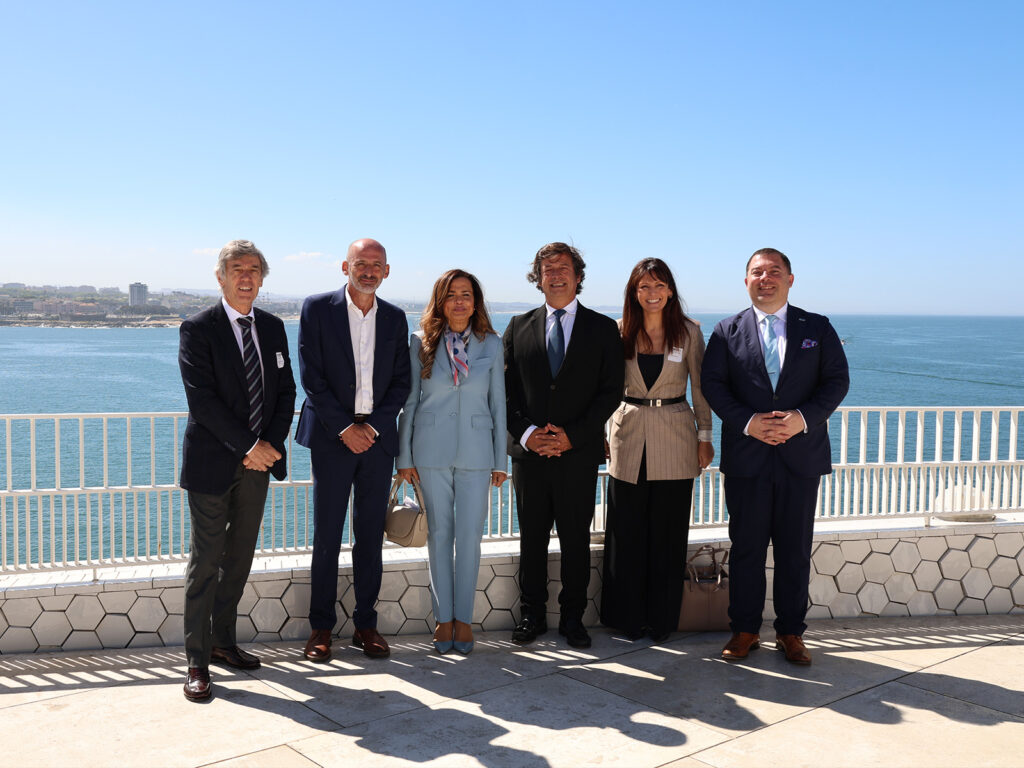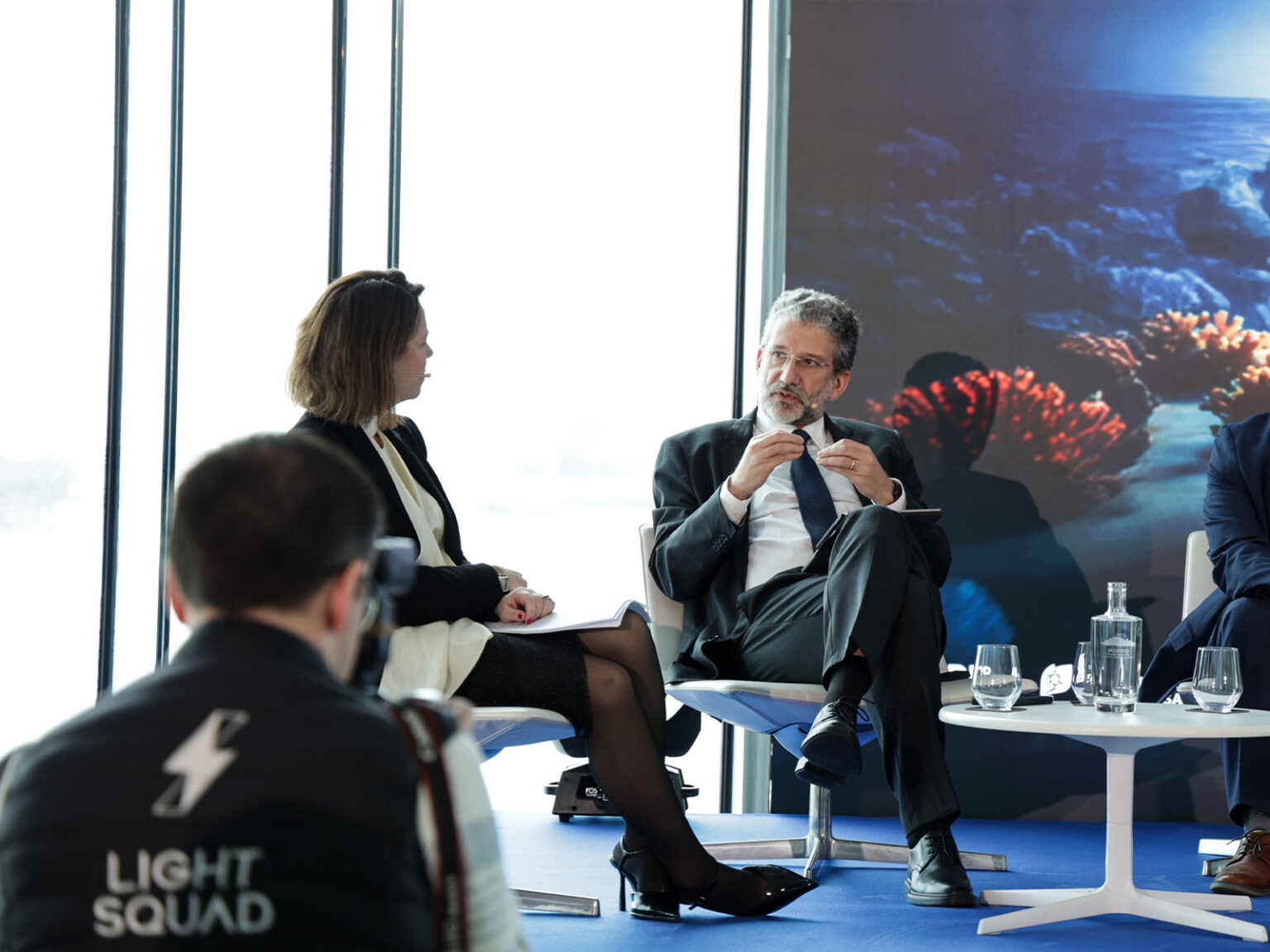
INESC TEC joined the latest edition of the Blue Wink-E event, dedicated to Artificial Intelligence and the future of the oceans. João Claro, President and CEO of the Institute, was one of the speakers in the discussion IA e o Mar: Estratégias para Escalar a Inovação Azul.
From predictive models to automated data collection, from the laboratory to real-world applications, Artificial Intelligence (AI) has driven great changes in the way we work, create and live. Within the Blue Economy, AI-related technologies and processes have transformed several areas, including ocean monitoring, marine resource management, the promotion of innovation and decision-making regarding strategic investments.
However, in maritime contexts, moving from technical capability to the constant use of AI depends on particularly demanding conditions: dispersed data, heterogeneous systems, multiple observation scales and operational environments shaped by uncertainty.
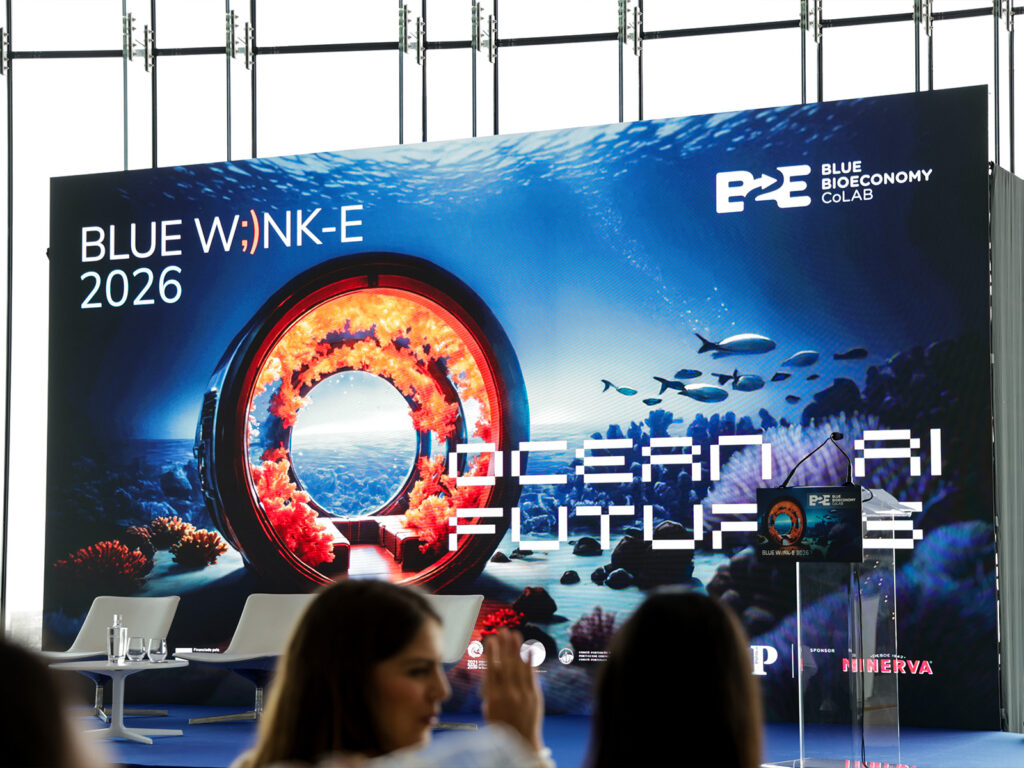
INESC TEC participated in the Blue Wink-E conference, organised by the B2E Blue Bioeconomy CoLAB, whose 2026 edition focused on how Artificial Intelligence can contribute to the preservation and management of the ocean of the future. Held at the Leixões Cruise Terminal, the event brought together academia, research, industry and businesses around a holistic vision of the blue value chain.
Today, AI already supports important areas related to the commercial and scientific exploration of the oceans: detecting illegal fishing, building predictive models for coastal erosion risks, identifying anomalies linked to coral bleaching at an early stage, as well as species identification and the accelerated development of marine biotechnology.
It is unsurprising that estimates from Grand Review Research point to rapid growth in the global ocean Artificial Intelligence market. In 2024, the sector was valued at around €4.13B – and it is expected to grow by 40.6% by 2030, reaching approximately €5.8B.
However, the irresponsible use of these technologies may also create negative and undesirable effects. According to the International Energy Agency, in 2024, 1.5% of global electricity consumption came exclusively from AI data centres, a figure expected to double to 3% by 2030. In the United States alone, these infrastructures consumed more than 64 billion litres of fresh water in 2023 – a figure that could double by 2028.
Moreover, the race to develop AI-related technologies has increased pressure on the extraction of minerals such as cobalt, lithium and rare earth elements, particularly from the deep sea – concerns already raised by INESCTEC.OCEAN through Eduardo Silva, Scientific Coordinator of the Centre of Excellence.
The lesson is straightforward: technology alone is not enough. There must also be investment in talent and leadership capable of encouraging the critical and responsible use of these tools. These conclusions framed the panel discussion IA e o Mar: Estratégias para Escalar a Inovação Azul, in which João Claro, Chairman and CEO of INESC TEC, participated.
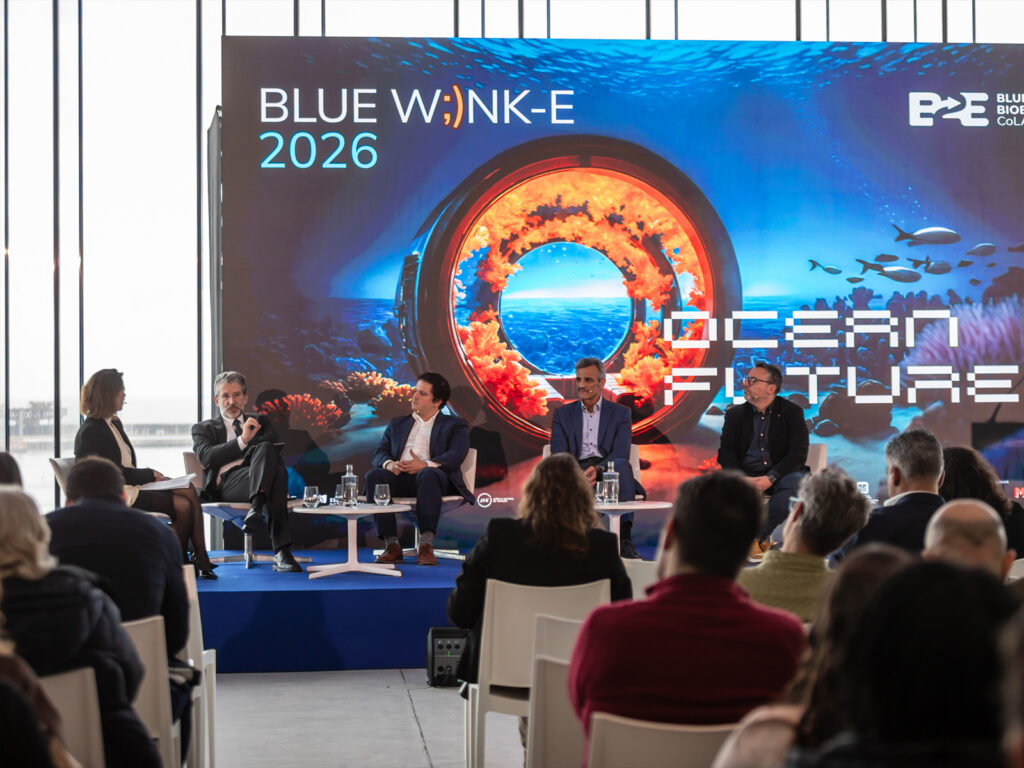
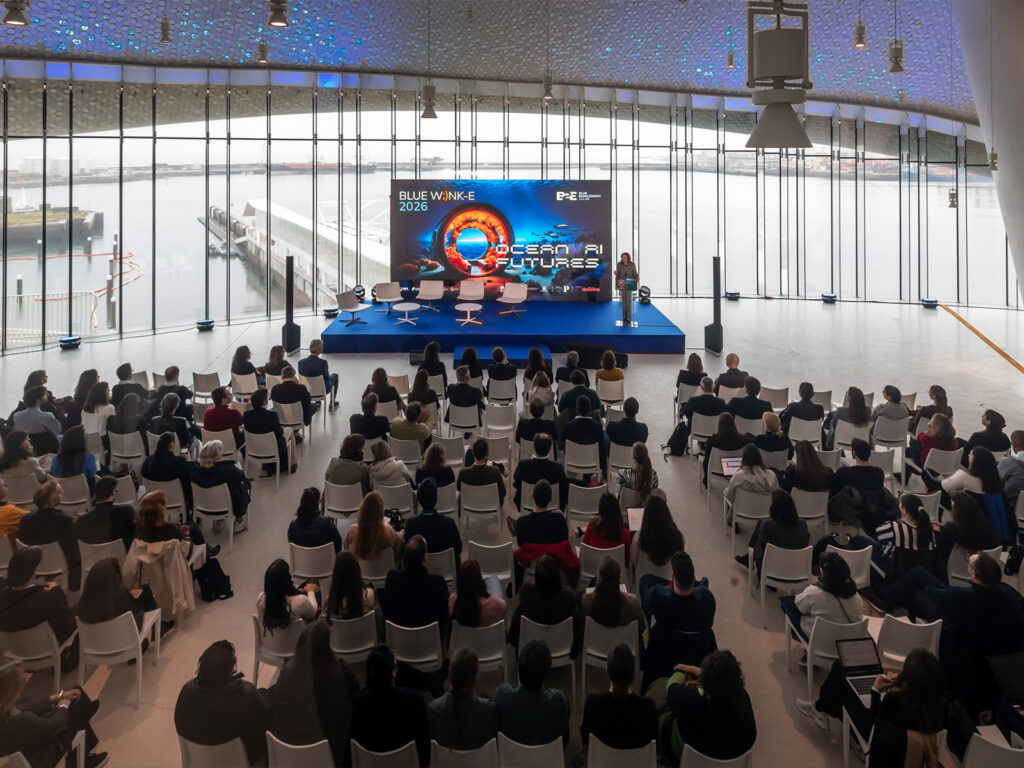
The discussion, moderated by Patrícia Gonçalves from B2E Blue Bioeconomy CoLAB, also included Kelwin Fernandes from NILG.AI, Álvaro Sardinha from C2EA – Centro de Competência em Economia Azul, and Guilherme Beleza Vaz from blueOasis.
João Claro began by highlighting that INESC TEC has dedicated significant research efforts “to data and, naturally, to the more fundamental AI technologies”. However, he also stressed that the Institute is “increasingly focused on developing talent and future leadership capable of using these technologies with confidence” and awareness.
The perspective presented by the FEUP lecturer focused less on listing applications and more on the conditions required to ensure continuity and scalability. In ocean systems, AI depends on coordination between observation, data, models, systems and decision-making.
“When this coordination is weak, promising demonstrations multiply, but operational consolidation remains limited. Once this foundation exists, continuously usable capabilities begin to emerge,” he explained.
Building a healthy and efficient relationship with AI should also extend to other concerns central to scientific work. In other words, the conscious and effective use of Artificial Intelligence technologies should be grounded in a commitment to Open Science and close cooperation between organisations of different kinds.
“There is already something natural at INESC TEC: an open-data approach to supporting decision-making. It is a pillar of European science policy. Therefore, in everything we do, we are increasingly concerned with properly systematising data and making it openly available,” explained João Claro.
The issue is both technical and institutional. In marine systems, data tends to be “discontinuous, heterogeneous and distributed across different platforms, geographies and scales”. Collecting more information is only part of the challenge: “the other part lies in organising, combining and reusing it under conditions of consistency and trust,” stressed the Chairman of the Institute.
Integrating AI: the examples of Iliad and Predico
In this context, open data, cooperation between organisations and interoperability become part of the essential infrastructure needed for Artificial Intelligence to function effectively.
To reinforce this vision, João Claro referred to examples of data and AI ecosystems in the energy sector, such as the collaborative platform Predico, dedicated to forecasting renewable energy production.
“We already have a data market – an Artificial Intelligence market – in the energy sector in Belgium, where the solution brings companies together with incentives to share data and generate benefits from it, creating economic impact for their business. The logic is transferable: when data circulates under conditions of trust and shared usefulness, models gain scale and applicability,” emphasised the Chairman of INESC TEC.
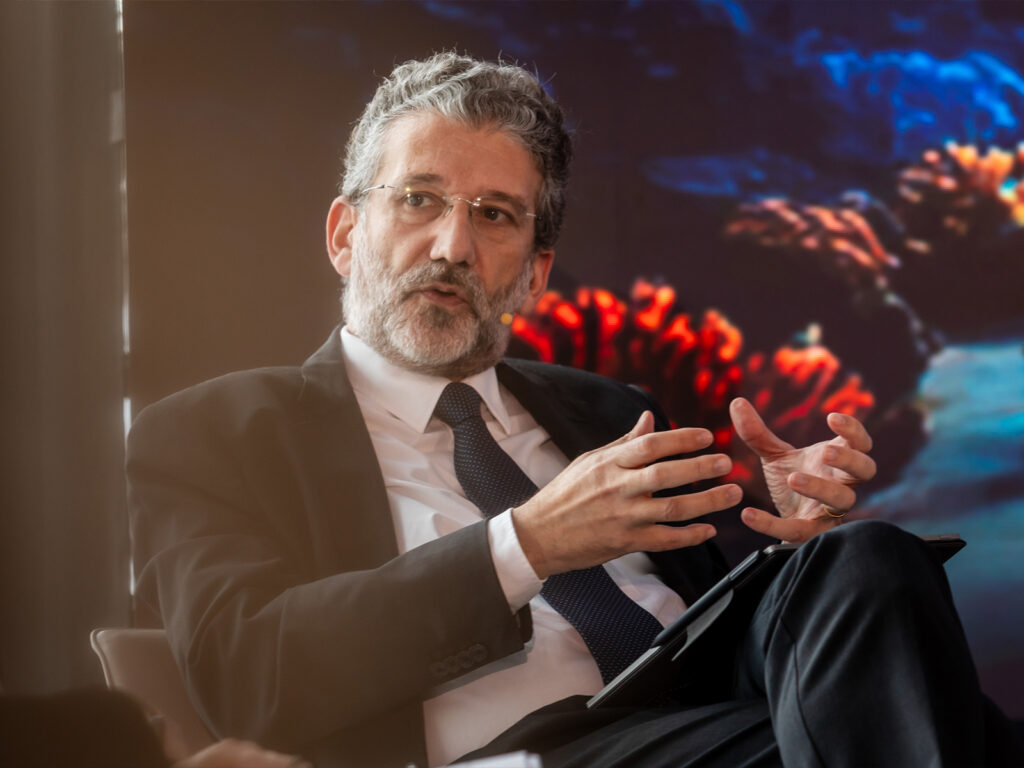
Focusing more specifically on the Blue Economy, João Claro also highlighted digital twins of the ocean. Given the “complexity of the ocean system, existing data is, in some ways, sparse and fragmented”, meaning that “there are several digital twins with different dimensions and different geographies”.
The issue “is no longer simply about improving observation”: instead, “it concerns the coordination between different representations of the ocean system, built for different regions, scales and purposes”, he stated.
Given these challenges, the President of INESC TEC stressed the need for “joint work to aggregate and coordinate the various digital twins, in which Artificial Intelligence plays a major role”.
One example is the Iliad project, to which the Institute directly contributed by developing models enabling interoperability between data, processes, applications and systems associated with different digital twins of the ocean across Europe.
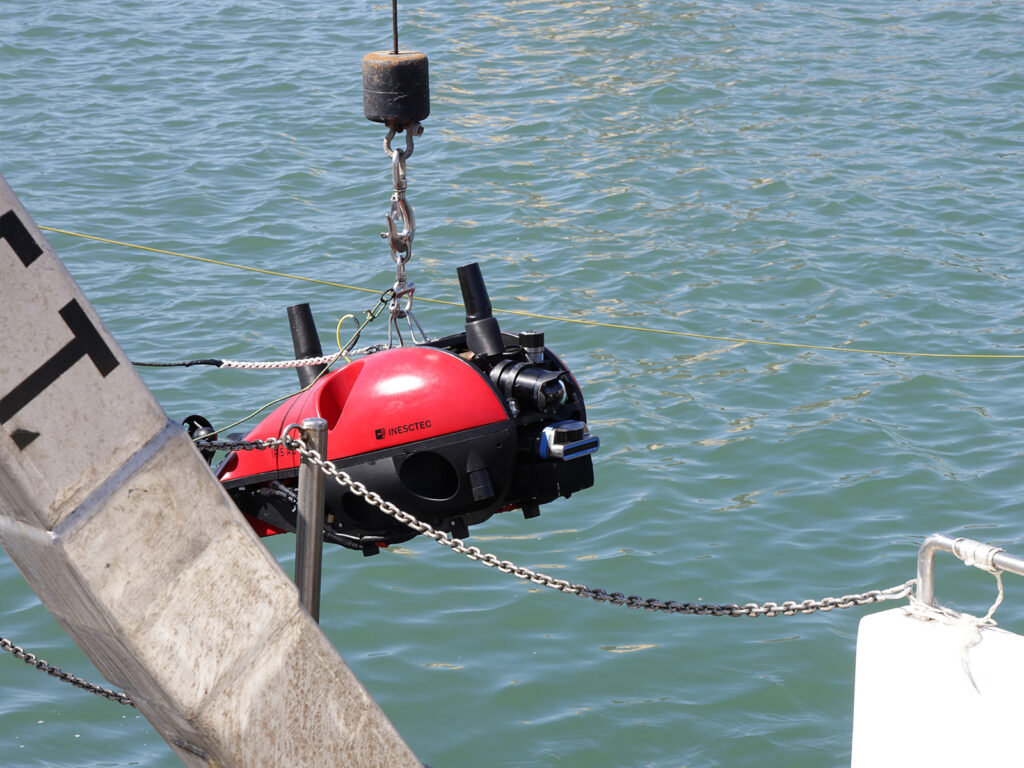
Addressing the case of INESCTEC.OCEAN and applications for the maritime sector, the CEO of INESC TEC reinforced the “level of maturity already achieved” in areas such as “autonomous vehicles, robotics for maritime missions, sensing and perception”. “Work is increasingly focused on integration between data, models and operations, in demanding environments and under real-world conditions.”
According to João Claro, it is natural that this experience with AI should drive the Centre of Excellence’s investment in “emerging technologies and their intersection with emerging value chains” within the Blue Economy. The Chairman of INESC TEC described it as “a challenge not squared, but cubed”, since in many cases “it is not only about developing new technological capabilities”. “It also involves the creation of new markets, new coordination processes and cooperative arrangements to improve these capabilities scale and use.”
Nevertheless, João Claro remains confident that Artificial Intelligence and continued collaborative work “can help unlock sectors and technologies with great potential”.
INESC TEC’s participation in Blue Wink-E provided a clear picture of the current discussion surrounding the relationship between Artificial Intelligence and the Blue Economy. AI already has a tangible presence in the ocean domain, but the decisive factor now lies in the quality of the connections that make it usable: structured data, cooperation between organisations, interoperability between systems, integration with models, and the ability to support decision-making with continuity and trust.