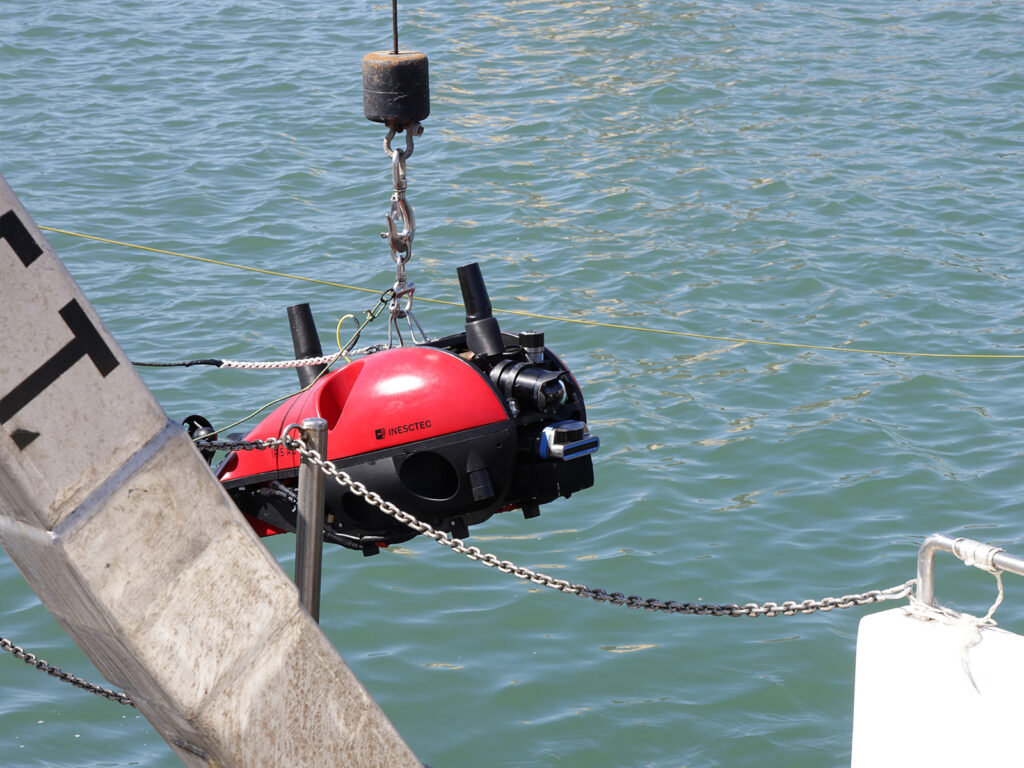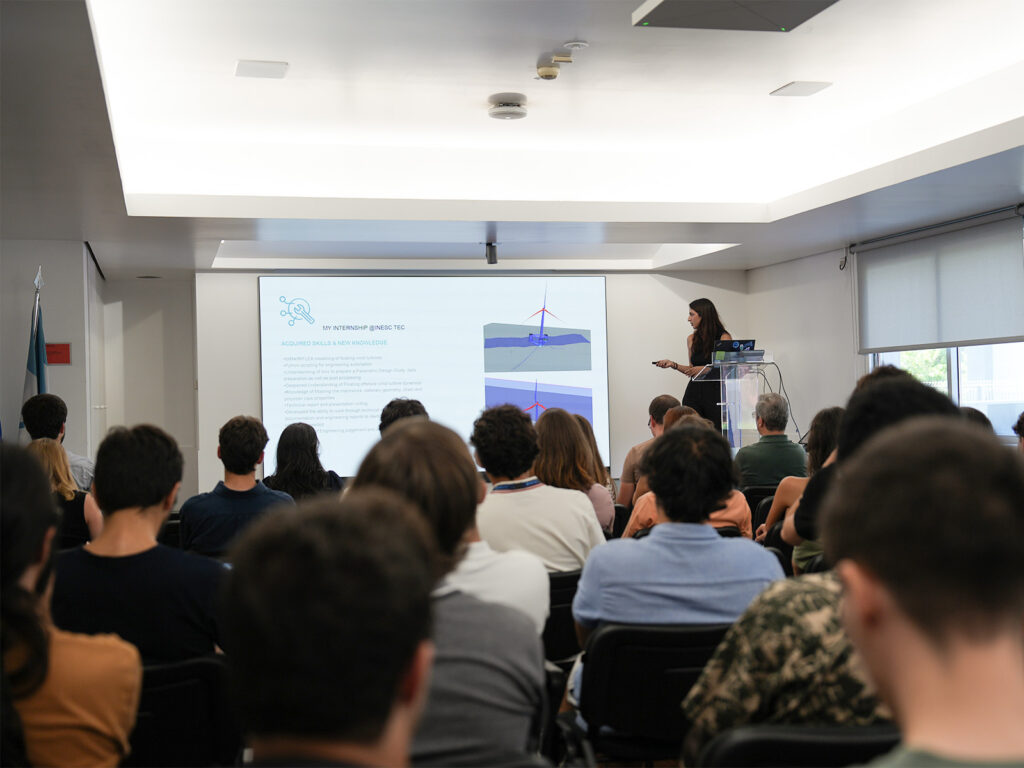
In Setúbal, a prototype of an intelligent floating platform for offshore wind energy is taking shape. Integrated within the structure’s pillars, optical sensors developed by INESC TEC researchers will monitor the condition of the platform throughout the service life: from the construction process until the installation.
Under the goals of the Energy Transition Alliance (ATE) – a project funded by the Recovery and Resilience Programme (PRR) – the initiative aims to build a concrete prototype structure to support floating offshore wind turbines. The platform seeks to reinforce Portugal’s ambitions to expand this type of marine renewable energy.
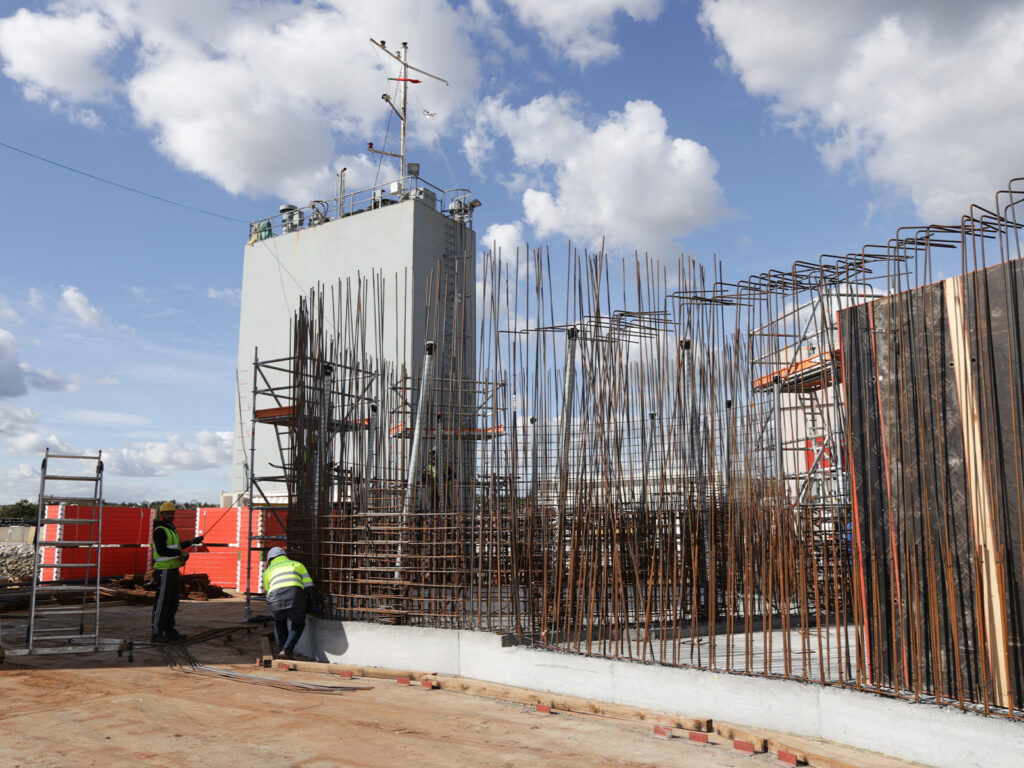
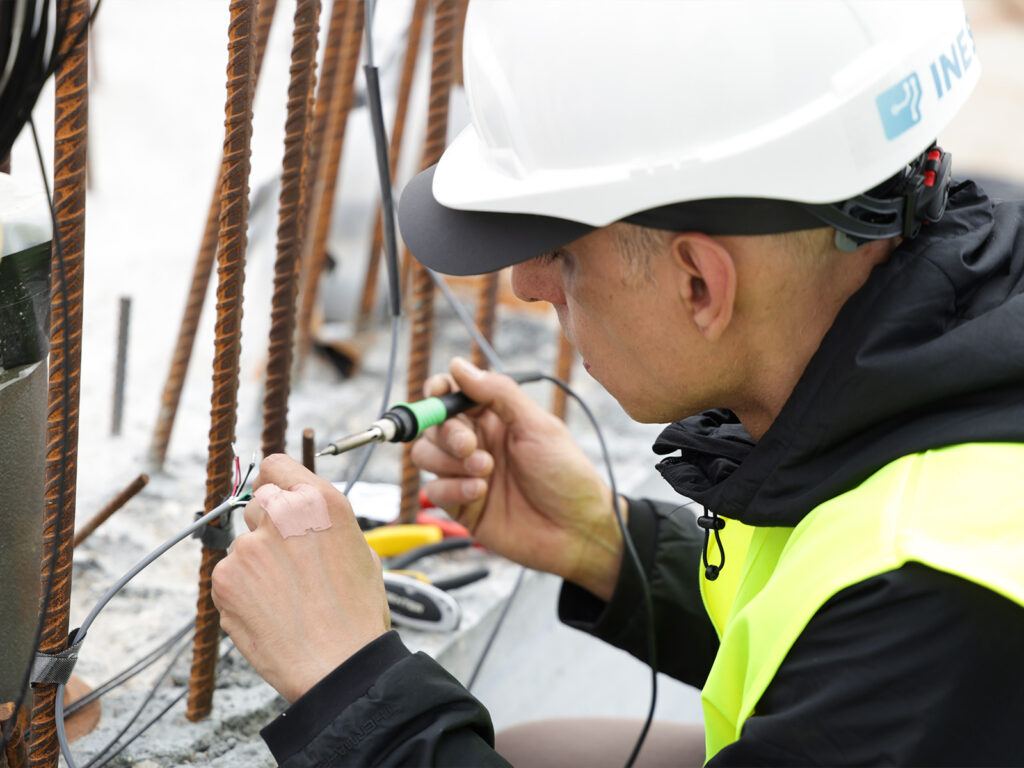
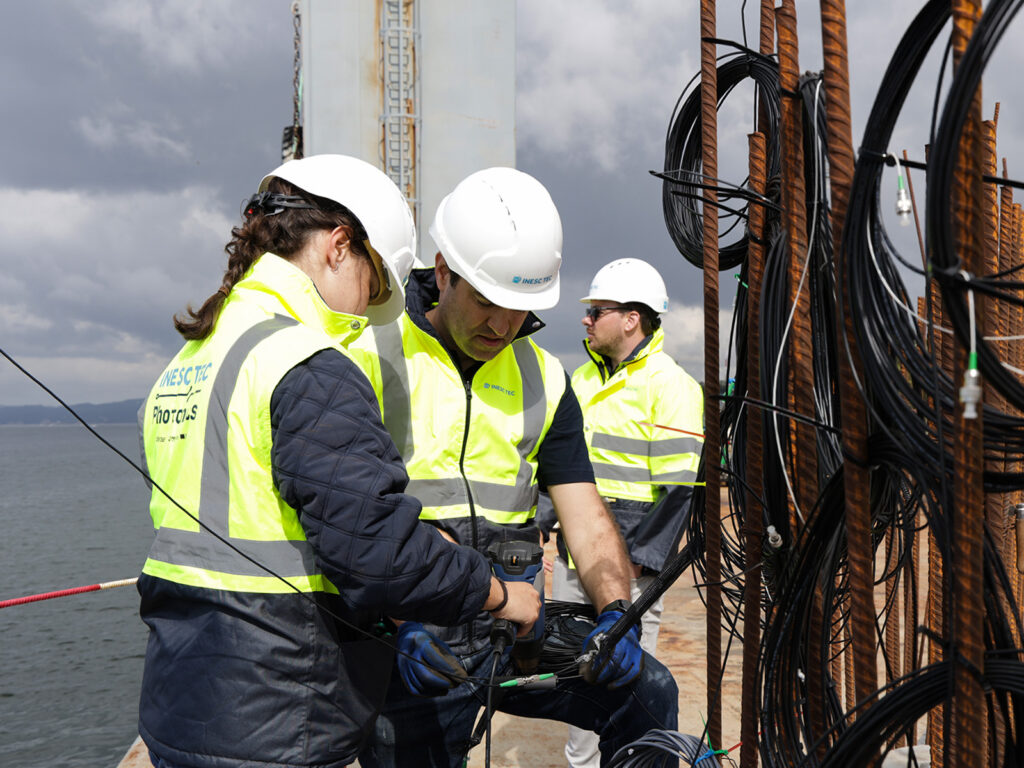
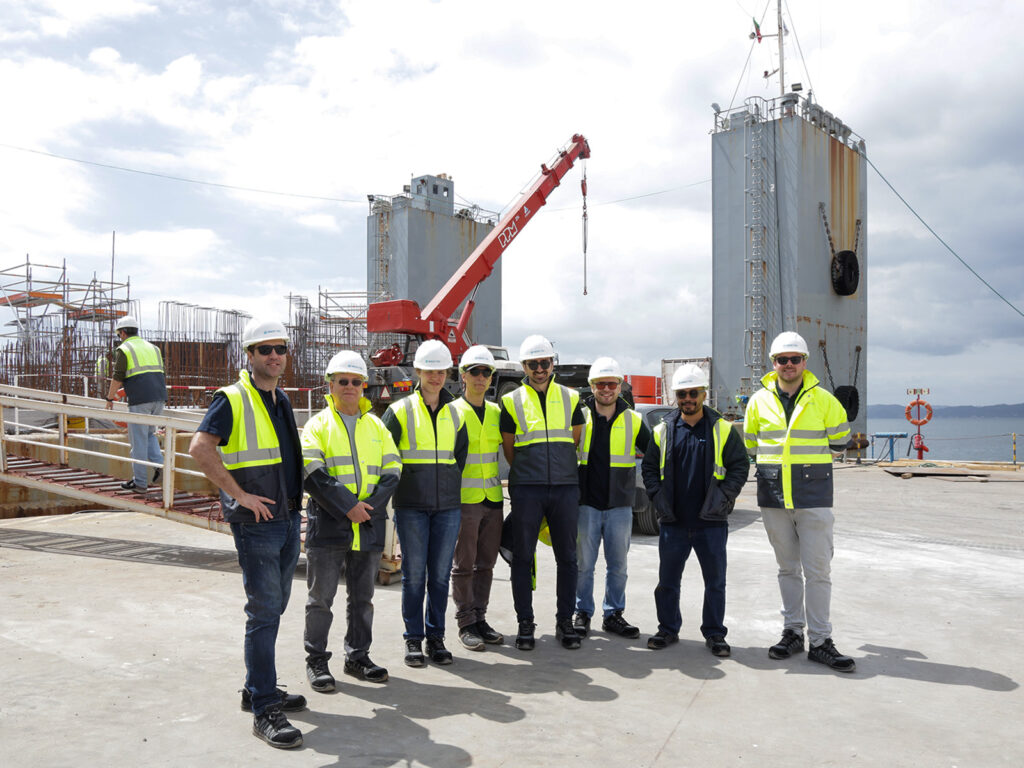
At the facilities of Etermar (the organisation responsible for building the structure) a team of researchers from INESC TEC’s Photonics area has already completed the first phase of developing and installing the optical sensors. The equipment “aims to monitor the condition of the concrete, from the dry-dock construction phase through to installation at sea and throughout the operational period,” explained Luís Coelho.
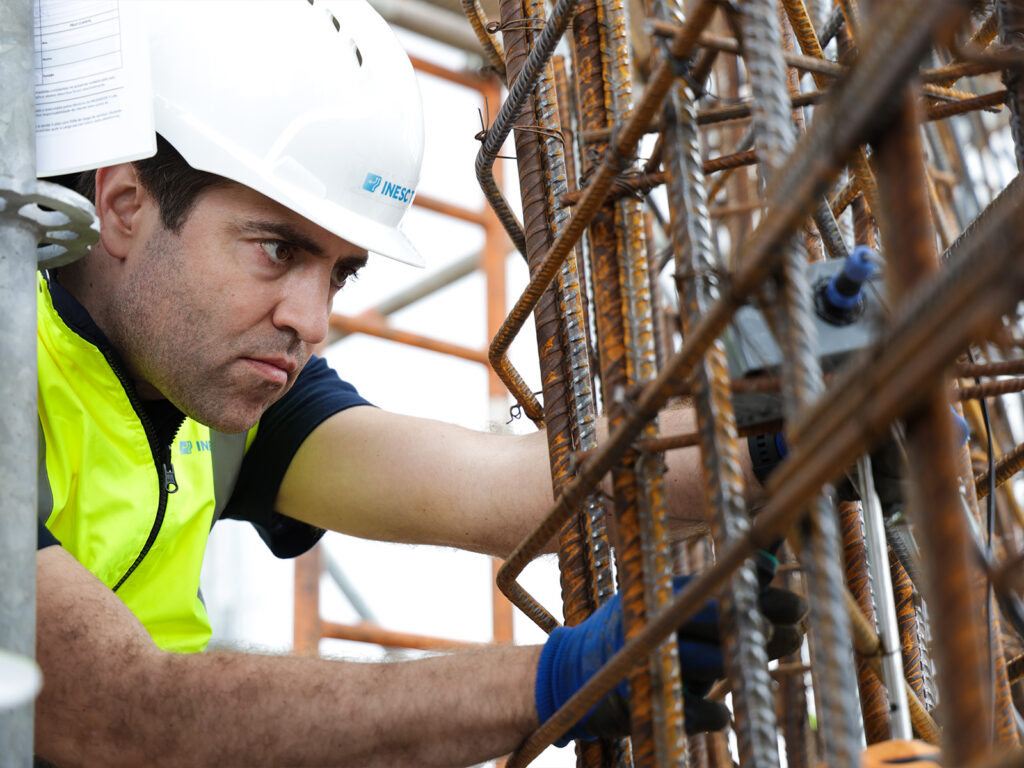
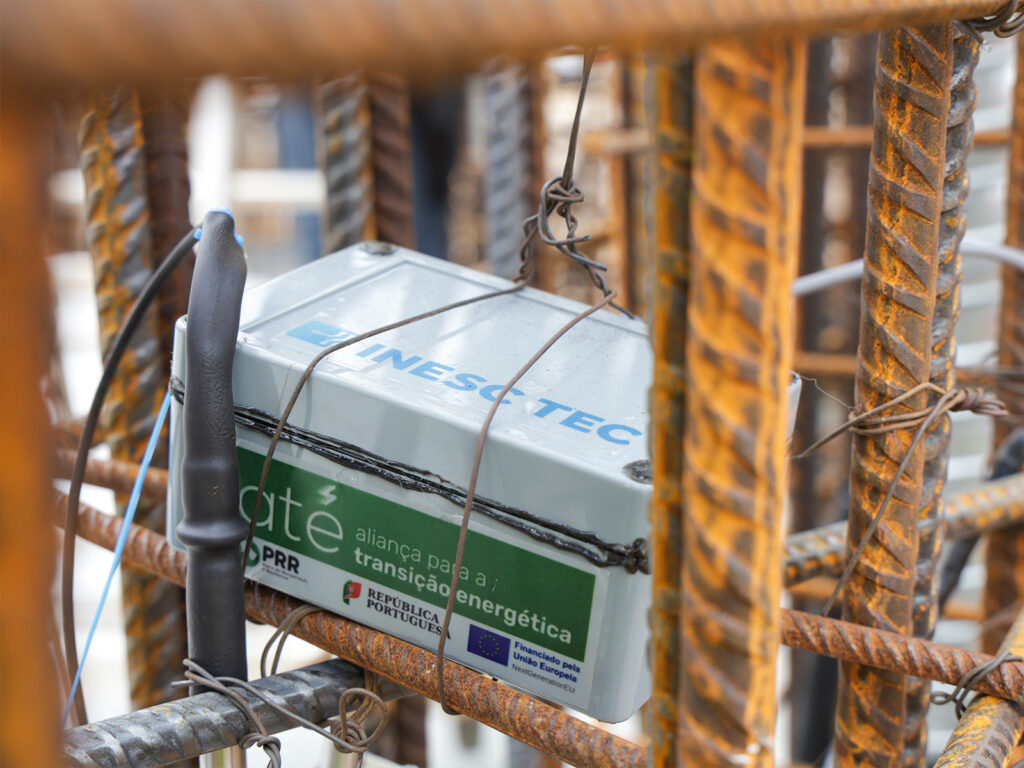
The researcher, coordinator of the Photonics domain at the institution, mentioned that some of the integrated fibre-optic sensors will monitor “parameters like temperature and humidity inside the concrete”. In addition, a “multi-sensor module has been implemented to monitor the curing process, detect possible water ingress, assess carbonation phenomena and indirectly infer corrosion processes”.
“Alongside the sensors dedicated to the integrity of the concrete, we’ll also install systems to measure levels of dissolved carbon dioxide and turbidity at depth, providing relevant information about the surrounding environment and associated environmental impact,” emphasised Luís Coelho.
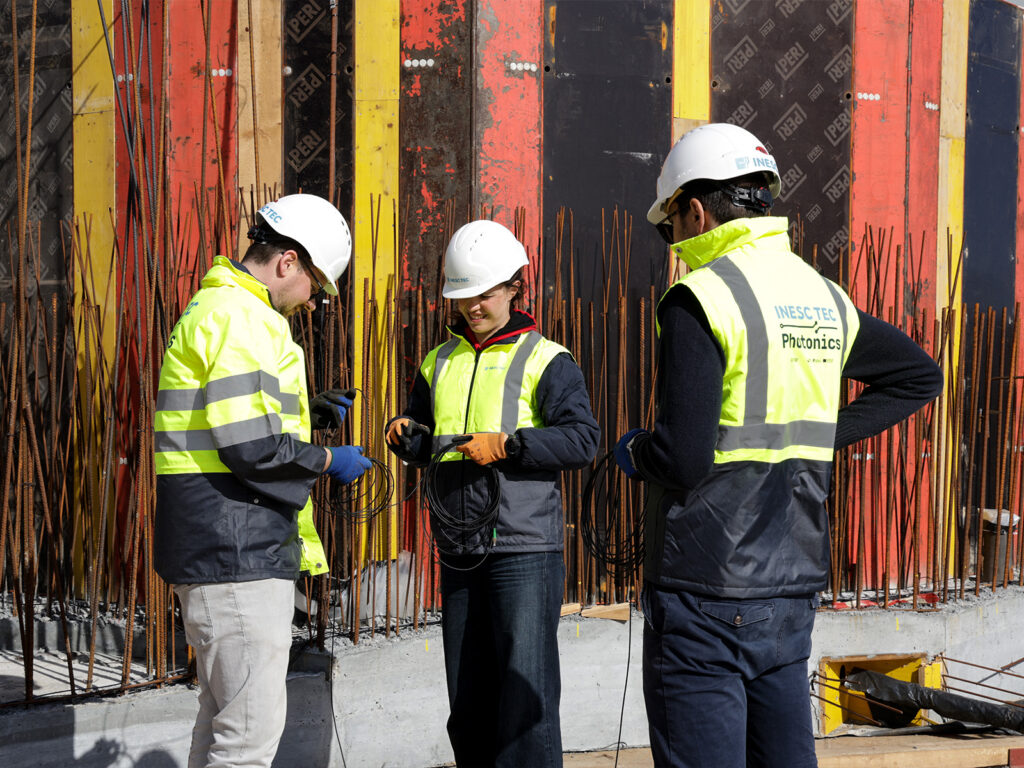
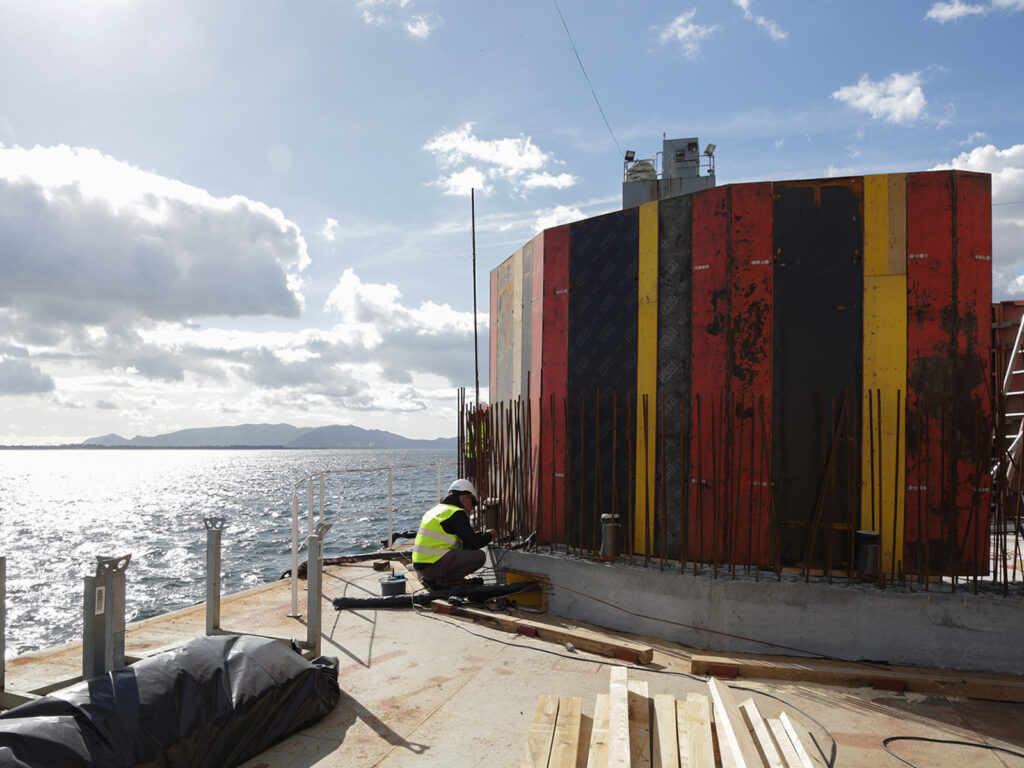
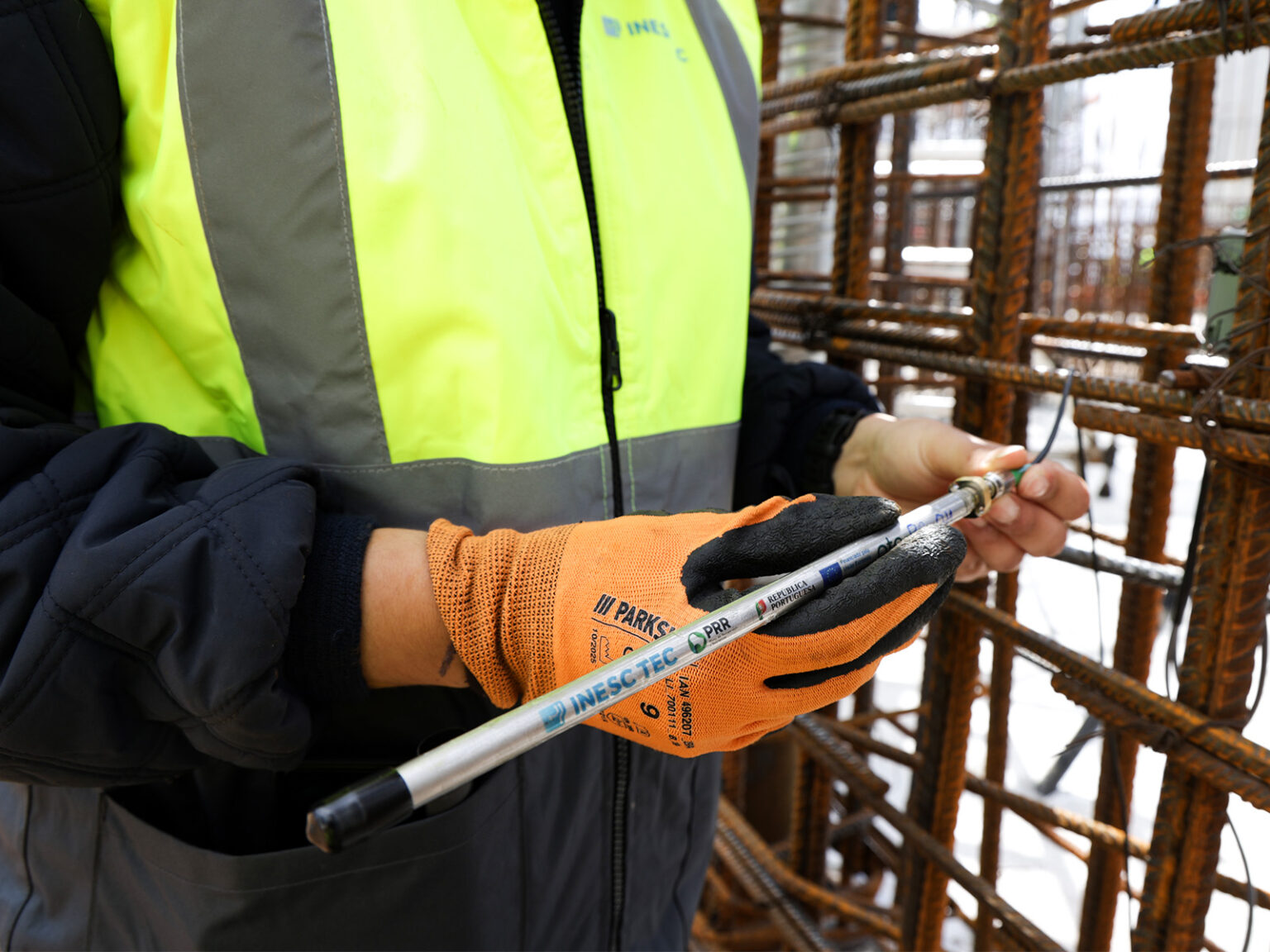
The researcher highlighted the differences between the two types of sensors used: “We installed highly robust fibre-optic sensors, connected through an entire fibre network to an interrogator – which will be housed in a container at the top of one of the towers – as well as a wireless sensor module.” Both technologies are currently in the patenting phase, having already been registered nationally and submitted internationally.
According to Luís Coelho, the monitoring process “is essential in the early stages to identify any anomalies during concrete curing and, later, to enable early detection of structural changes or water ingress – factors that could compromise the platform’s stability”.
“The goal is to create a floating structure capable of remaining offshore for many years. It’s crucial to ensure the structure remains watertight, preventing it from sinking while naturally withstanding both the wind turbines and the harsh offshore conditions,” summarised the INESC TEC researcher.
The first installation phase covered the systems that will remain in the underwater section of the structure, five metres below the waterline. In the next phase of the project, the team plans to return to Etermar’s facilities to install additional sensors that will sit up to three metres above sea level, in the splash zone – the sector at wave height.
The initiative is built on close cooperation between four organisations: alongside INESC TEC, Fórum Oceano and WavEC are also involved in the consortium, which is led by Etermar.
Taking on the deep and demanding Atlantic Ocean
Offshore wind energy is not new in Portugal: continental Europe’s first floating offshore wind farm is located off the coast of Viana do Castelo. However, there are still challenges to deploying this type of renewable energy in Portuguese waters.
Concerning the Atlantic Ocean context, “the great depth close to Portugal’s coastline makes it difficult to install fixed-bottom wind turbines”; in this sense, floating structures may be a solution: anchored by mooring cables, they provide greater flexibility and adaptability to the typically harsh conditions of the Portuguese Atlantic.
According to Luís Coelho, “the objective is to reduce production costs and increase the competitiveness and durability of these structures”. “At the same time, the project seeks to overcome some of the limitations of steel in aggressive marine environments, where corrosion and material degradation can reduce the lifespan of structures and, consequently, their profitability,” he explains.
Technology and science working together for marine renewables
The project aims to validate, in all dimensions, “a technology based on the creation of an intelligent platform”. To achieve this, the structure “will be equipped with a broad set of sensors installed at different stages of the process, both during and after construction, by INESC TEC and the other partners”, said Luís Coelho.
“All of this instrumentation will be integrated with an advanced digital component through the creation of a digital twin,” whose development is being led by WavEC, he stated. In the future, this component “will make it possible to develop predictive maintenance and repair models, maximising efficiency and operational optimisation”.
Moreover, beyond monitoring the structure itself, there will also be the possibility of “continuous observation of the surrounding water quality”, enabling real-time data collection and potential analysis of the environmental impacts of installation at sea.
“Once the technology has been validated, this prototype could become a scalable solution, with potential future application in floating offshore wind farms,” concluded the researcher.