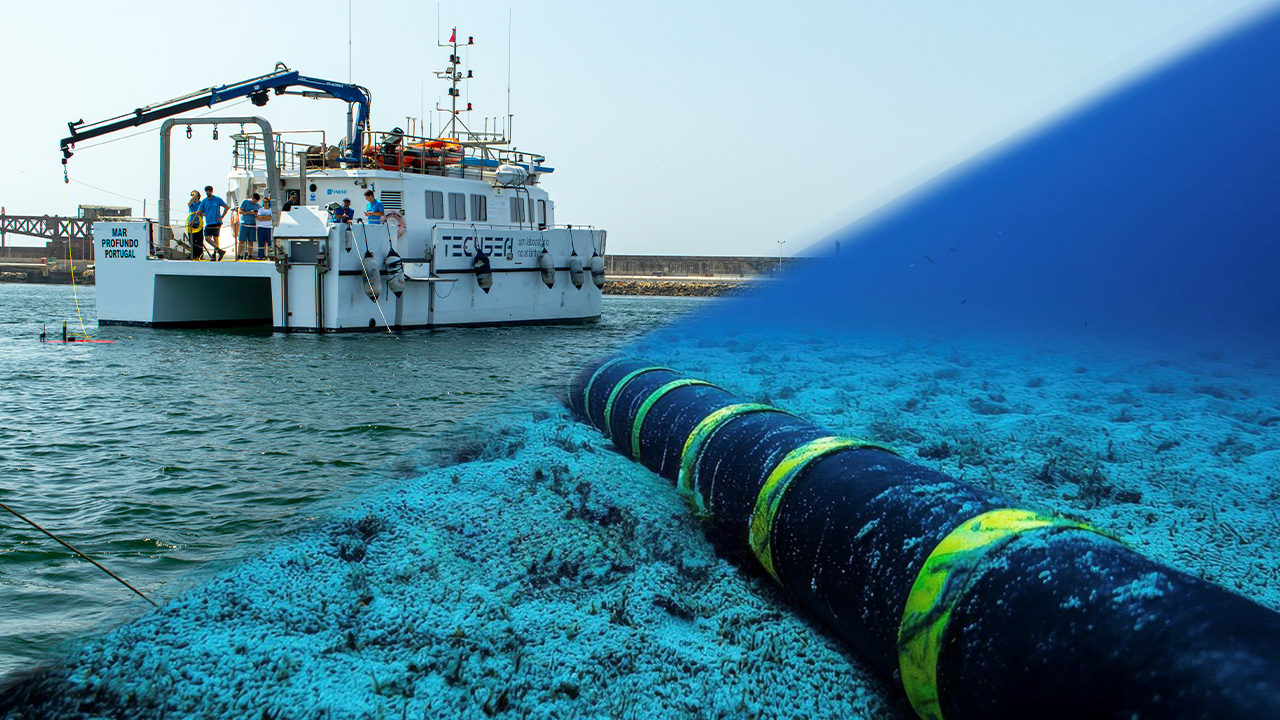
What if underwater fibre optic cables could not only “listen” to ships, but also estimate their speed and trajectory? While these cables are mostly known for connecting the world to the Internet, they could also become an important complement to the current Automatic Identification System (AIS) for maritime traffic monitoring.
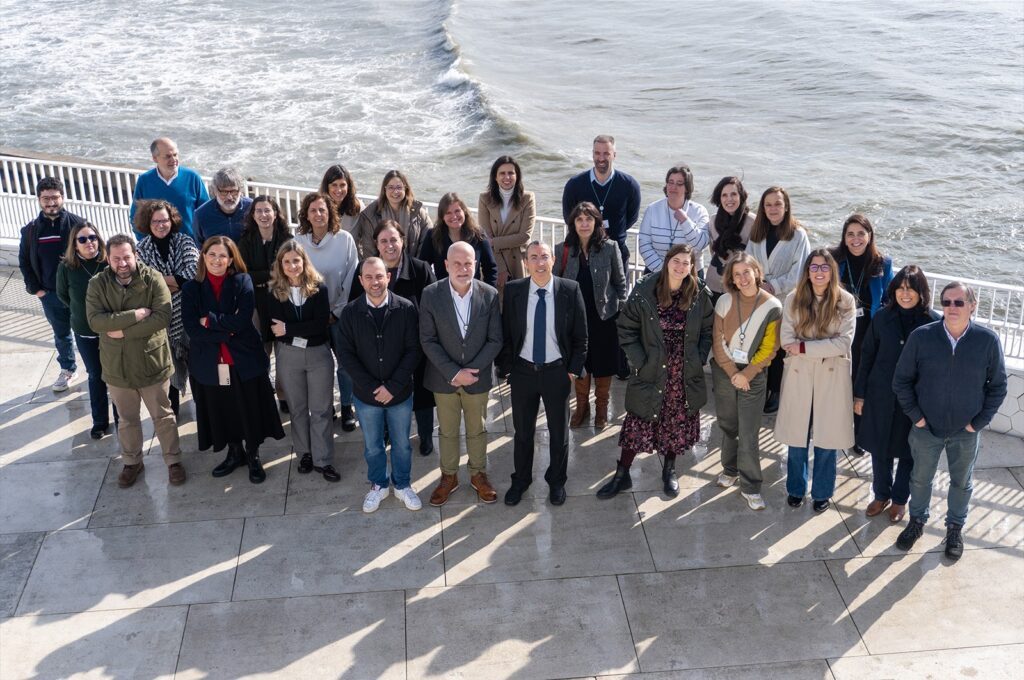
The work, developed within the OBSERVA project, brought together researchers from INESC TEC, the Faculty of Sciences at the University of Porto (FCUP), and the Portuguese Navy Hydrographic Institute, under the premise of combining Distributed Acoustic Sensing (DAS) techniques with underwater cables, supported by physical models and machine learning methods. This enabled the detection, monitoring, and classification of vessels from acoustic data.
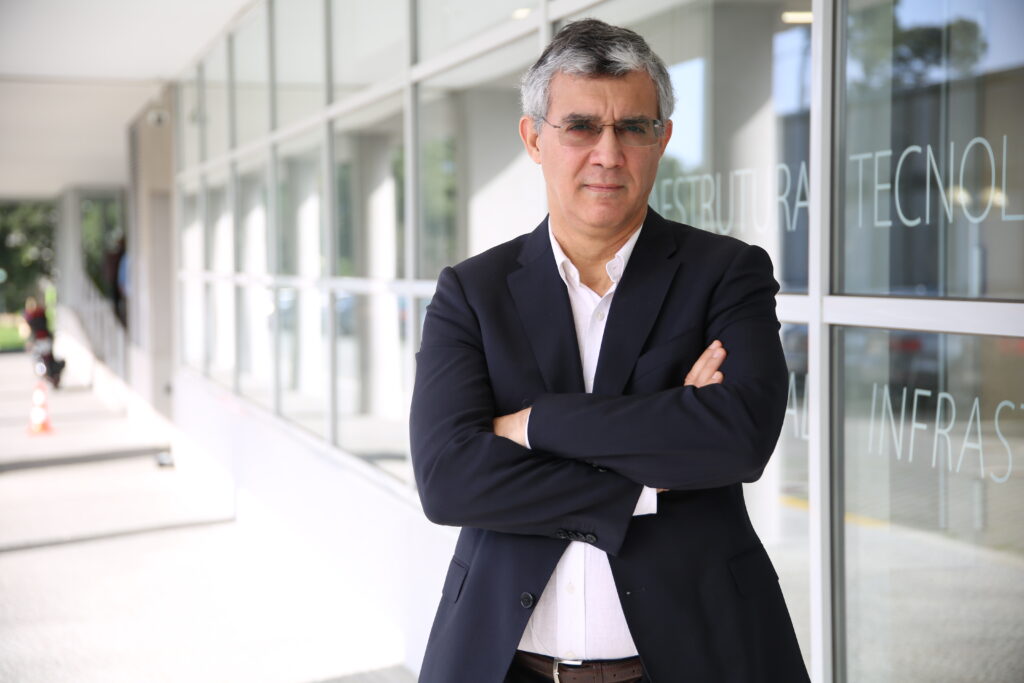
“The advantage of distributed acoustic sensing is that it leverages infrastructures that already exist in the oceans,” explained Orlando Frazão, researcher at INESC TEC and lecturer at FCUP. “With proper processing, these cables can become a practical sensing layer for maritime surveillance.”
While the ability of seabed equipment to detect ships is not new, this research adds a key contribution: a physics-based approach that goes beyond merely detecting vibrations caused by moving vessels.
Instead of relying solely on pattern matching, the team developed a direct model capable of simulating the distinctive hyperbolic signatures of ships in DAS waterfall plots. From there, they solved the inverse problem: estimating speed, trajectory, and other depth-related data. The process used a stochastic optimisation method – Differential Evolution – guided by a correlation-based loss function, avoiding the need for absolute signal amplitude calibration.
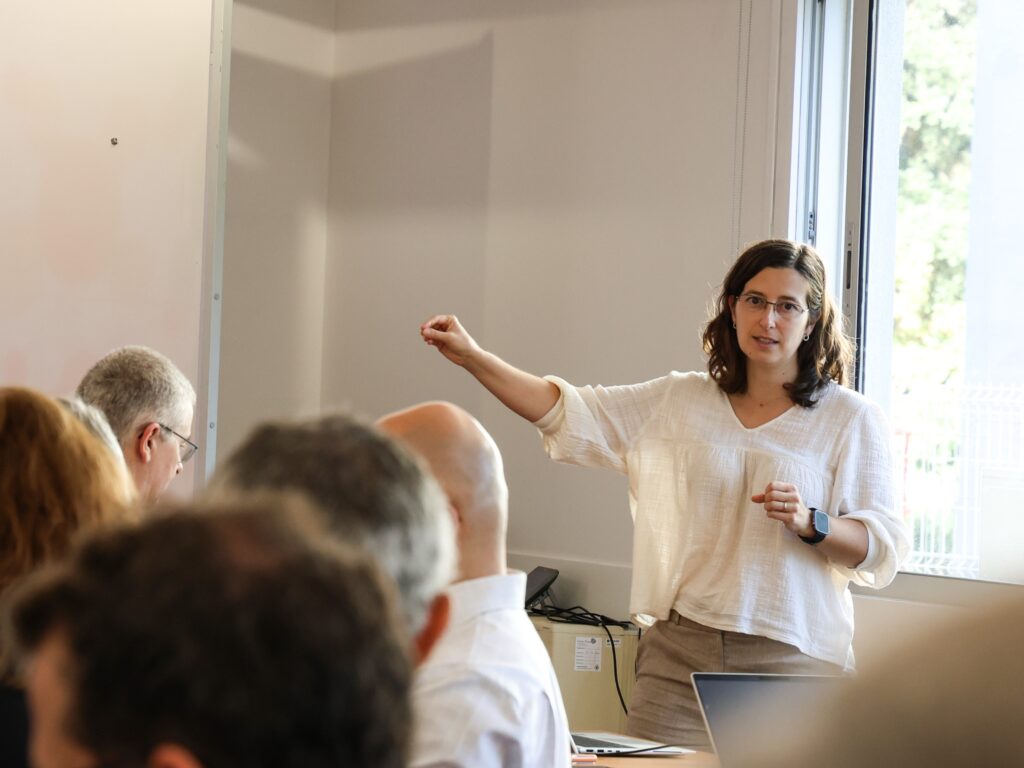
“We developed an algorithm that not only detects ships but also reproduces the DAS pattern observed with a physical model, which then searches for the vessel parameters that best match the simulated pattern,” explained Ricardo Sousa, researcher at INESC TEC and project leader. “Using a correlation-based objective function makes the method reliable, even when the signal amplitude is difficult to calibrate.”
The method was tested on two real datasets: Case A, ‘Mestre Horácio’, and Case B, ‘Wilson Hirtshals’. The researchers found that the DAS signal topology corresponded closely to the actual parameters measured at sea in both cases, showing strong agreement between the model and AIS reference data. Remarkably, the estimated speed in Case B differed by less than 1% from AIS, even under noisier conditions.
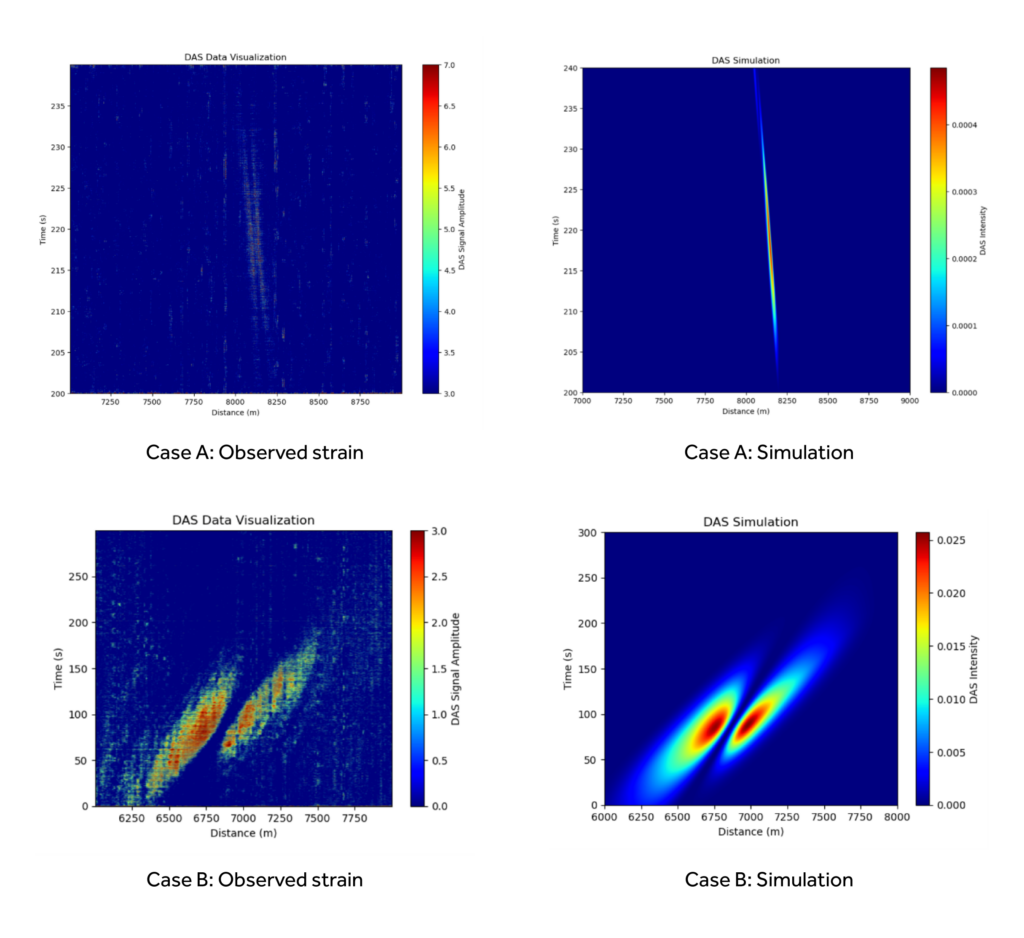
The team stated that their work supports the case for using existing underwater cables as continuous sensing platforms. The study shows that these structures could serve as a practical complement to the AIS, not just an alternative. The close match between the simulated data and real observations confirms the potential of said cables for maritime traffic monitoring.
Additionally, since the cables are already installed on the seabed, the marginal costs of applying a dense line of acoustic sensing along tens of kilometres would be much lower compared to installing and maintaining dedicated equipment.
Distributed Acoustic Sensing could be especially valuable when the AIS is absent, switched off, delayed, or spoofed. The method could also support data fusion workflows, filling coverage gaps and flagging anomalous vessel behaviour.
“A clear and continuous picture of what happens at sea is crucial for maritime safety and secure navigation,” concluded Ilmer van Golde from the Portuguese Navy Hydrographic Institute.
The research was developed under the OBSERVA project, led by INESC TEC, aiming to advance maritime surveillance. The study is freely available on the Journal of the European Optical Society-Rapid Publications platform.