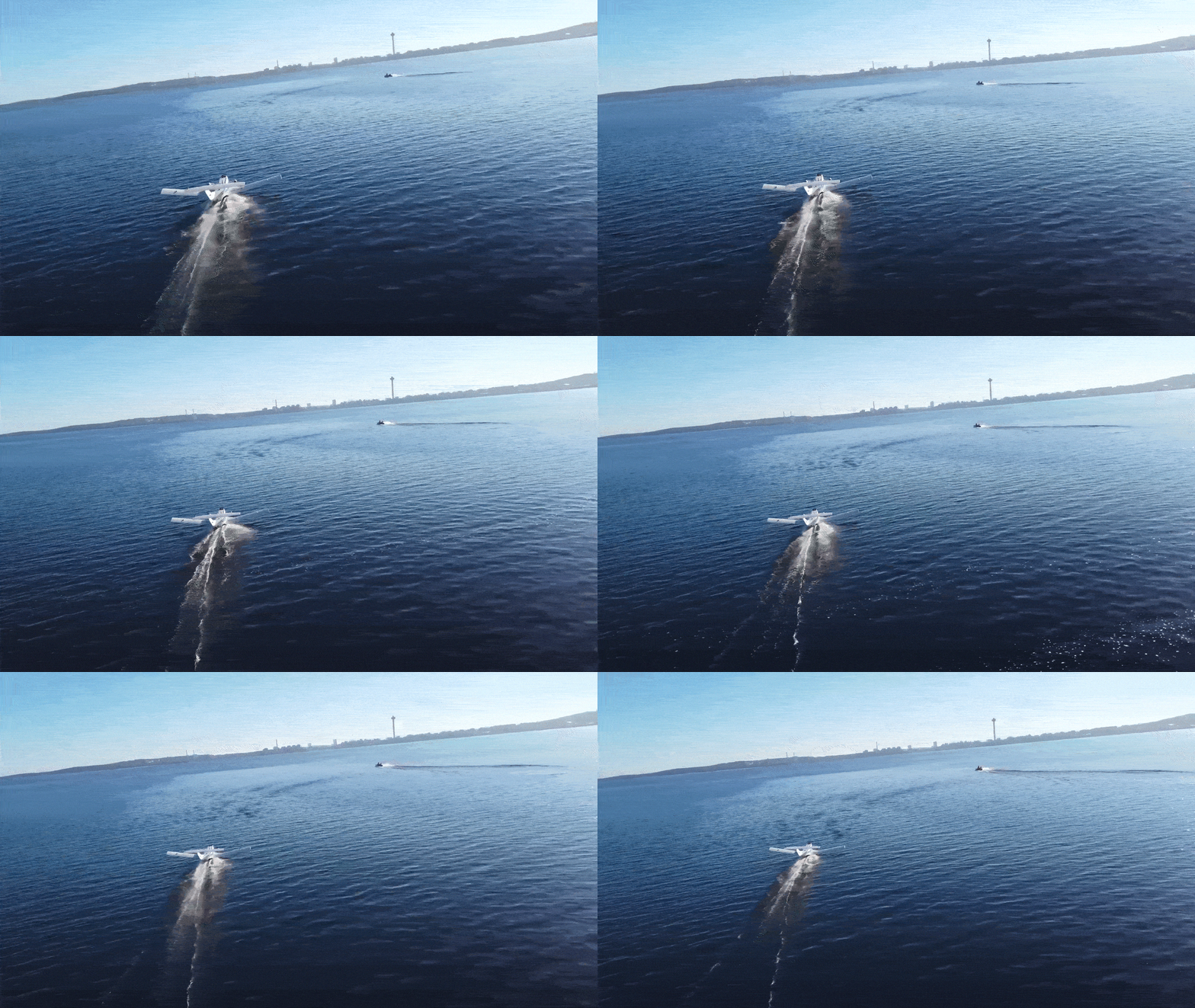
Autonomous, electric and potentially scalable, it can carry cargo and even passengers. The AIRSHIP project has come to an end with the demonstration of a prototype vehicle capable of reaching speeds of 100 km/h while operating close to the water’s surface – INESC TEC equipped the “flying boat” with a perception system.
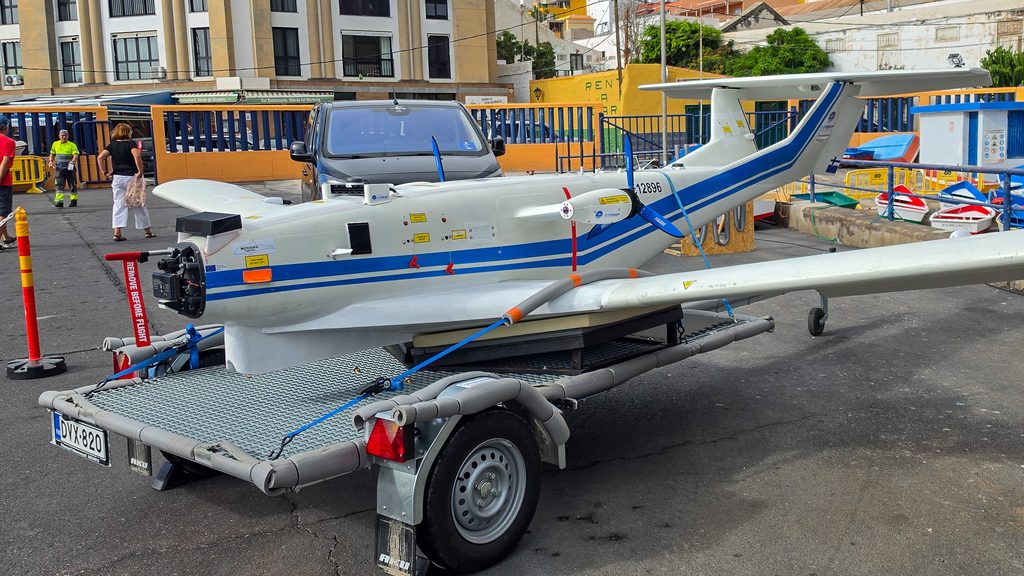
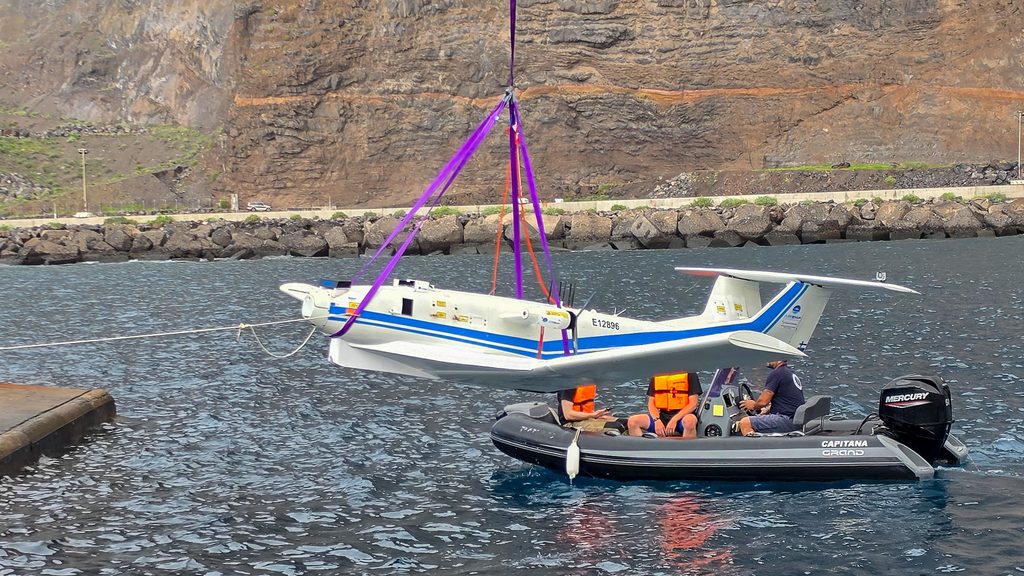
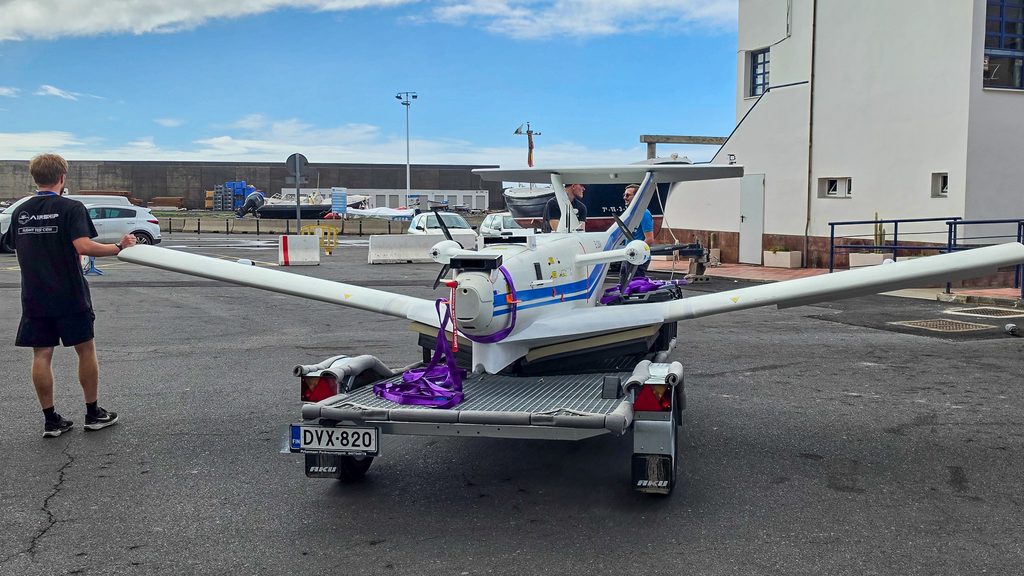
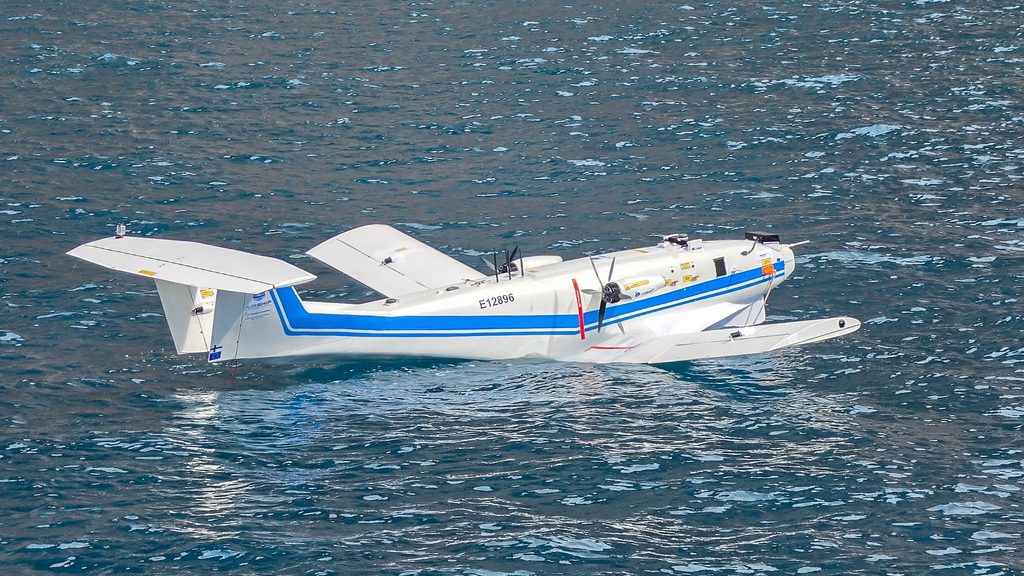
La Gomera, one of the wildest islands in the Canary Islands, is known as the “Magic Island” for its cliffs, beaches and valleys, which unfold across a small volcanic landscape. It was against this backdrop that an unusual means of transportation made a debut: a “flying boat”, or a ground-effect vehicle, which looks rather like an aircraft but behaves like a boat.
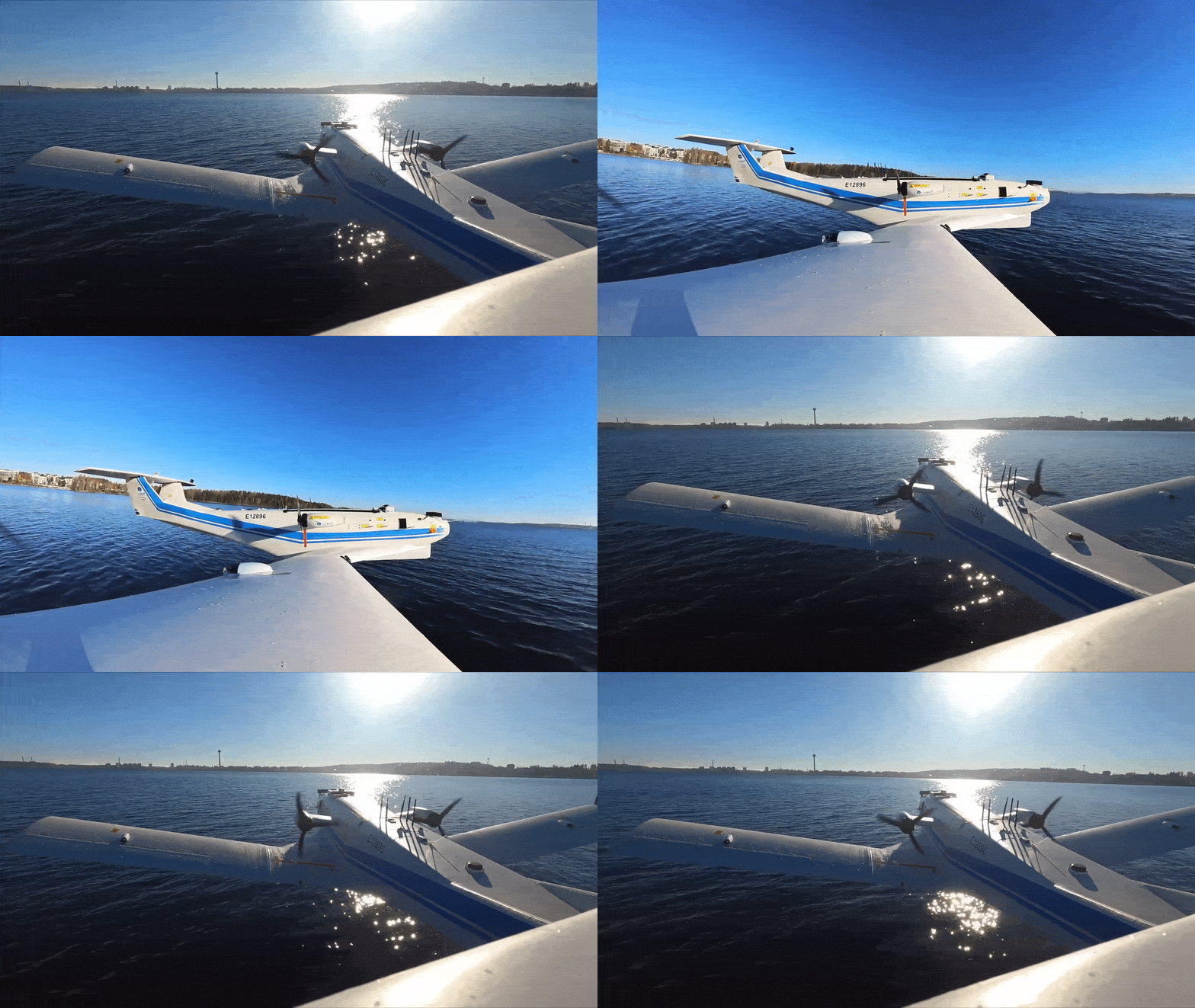
The prototype is the culmination of four years of work under the project Autonomous Flying Ships for Inter-Island Waters Transport – AIRSHIP. The result? The validation of an autonomous electric vehicle capable of travelling at high speeds close to the water’s surface. INESC TEC, one of the project partners, developed and integrated the vehicle’s perception system.
The technological challenge was “enormous”, said Guilherme Amaral Silva. The AIRSHIP-1 can travel at 100 km/h and at low altitude, skimming the water’s surface. “At these speeds and timescales, failing to detect an obstacle in time seriously compromises safe operation and the physical integrity of the platform,” explained the researcher, who travelled to the Canary Islands between 11 and 13 November for the final demonstration.
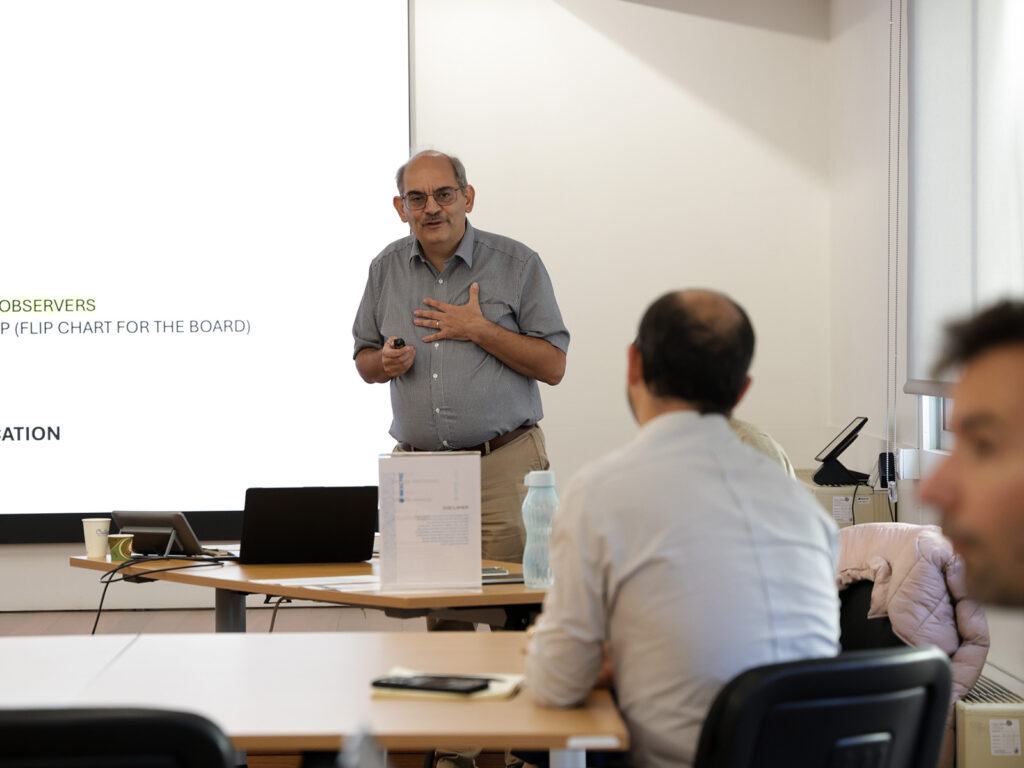
In Porto, Guilherme Silva and the INESC TEC researchers developed advanced real-time processing and multi-sensor fusion solutions capable of detecting, classifying and tracking obstacles over long distances and with low latency. “INESC TEC was able to demonstrate in real-world conditions the effectiveness of a high-throughput, resilient perception architecture, which is essential for enabling the prototype to navigate autonomously and safely in a real maritime environment,” summarised Guilherme Amaral Silva.
These types of platforms, also known as ekranoplans, rely on the wing-in-ground effect. They travel very close to the water’s surface, benefiting from increased lift and reduced aerodynamic drag, which allows them to reach high speeds with greater energy efficiency. Although they may look like futuristic technology, the first experiments date back almost 100 years, and these vehicles became particularly popular during the Cold War, when the Soviet Union developed several platforms of this kind.
Seven tonnes of cargo
And the “flying boat” could soon venture beyond the waters around La Gomera. A market study and business model developed by the consortium also demonstrated that a platform such as AIRSHIP-1 has “strong potential for scalability and economic viability”, opening the door to “commercial applications across multiple high-value operational scenarios”.
Guilherme provided a good example: “In the context of sustainable freight transportation, the potential of this technology becomes clear when we consider how the prototype could evolve into a larger-scale commercial concept: a platform around five times bigger, with the capacity to carry between four and seven tonnes of payload.”
This is because the vehicle combines the strengths of maritime transportation (capacity) with those of aerial solutions (speed). “Ground-effect platforms are specifically designed to bridge this gap, combining high travel speeds with the energy efficiency that comes from operating at very low altitudes,” the researcher explained.
But the potential applications do not end there: A platform such as AIRSHIP-1, which combines speed with a sophisticated sensor suite, could provide an extremely rapid response in maritime emergencies. It could also be used to patrol protected marine areas, detect pollution or monitor coastal ecosystems that are difficult to access.
Looking back on the four-year project, Guilherme Silva described the outcome as “extremely positive”, highlighting technological advances in the architecture for fusing data from heterogeneous sensors: electro-optical cameras (configured as a stereo pair), a thermal camera, mmWave radar, LiDAR and an AIS (Automatic Identification System). The system also features precise navigation based on an RTK GNSS receiver and a “high-quality inertial system”.
“This multi-sensor approach gave the system a high degree of robustness and resilience, allowing it to operate reliably even in adverse and changing environmental conditions, such as sunlight reflecting off the water, dense fog and rainfall,” concluded the INESC TEC researcher.
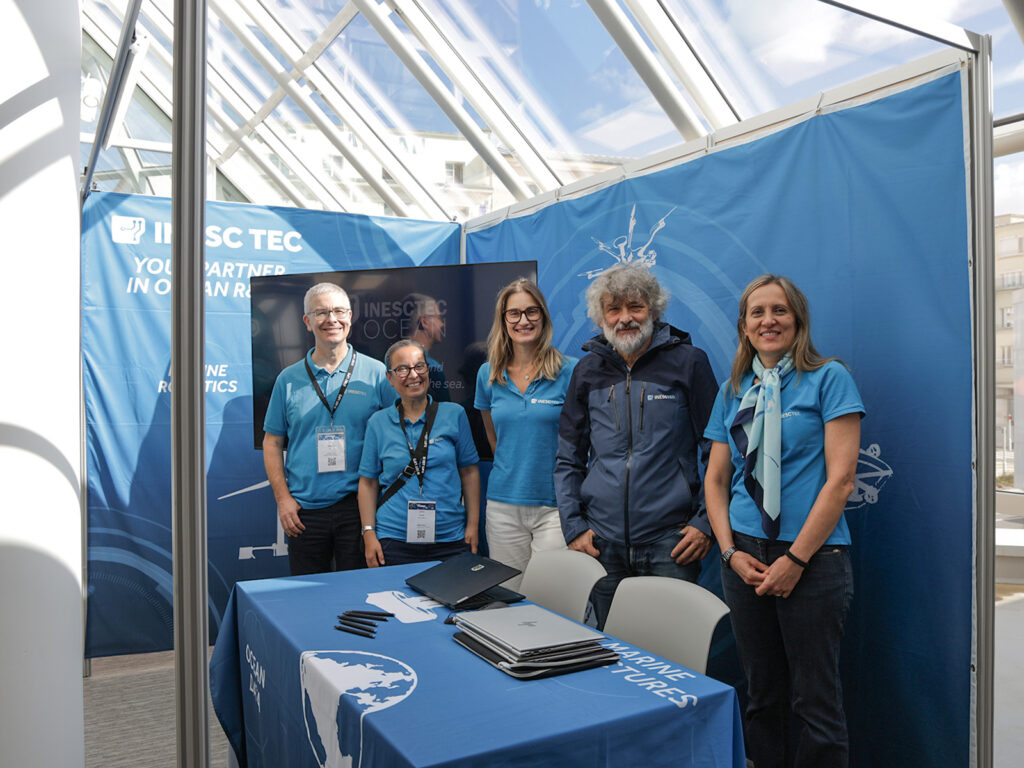
With a total budget of around €5.1M, AIRSHIP was funded by the European Union through the Horizon Europe programme. Coordinated by the Technical University of Madrid (Spain), the project brought together an international consortium of seven partners from five countries: INESC TEC and Trisolaris Advanced Technologies (Portugal), Tampere University (Finland), Tallinn University of Technology – TalTech (Estonia), the University of Luxembourg (Luxembourg) and La Palma Research Centre (Spain).