The Ocean has always represented one of the most complex frontiers of human knowledge. Covering more than 70% of the Earth’s surface, its vastness is home not only to ecosystems that are vital to the planet’s balance, but also to economic assets and critical infrastructure — from submarine data cables to offshore energy networks — that are crucial to modern society. Today, in a global scenario marked by growing geopolitical tensions and the urgency of sustainability, the ability to continuously observe, protect and operate at sea has ceased to be an advantage and has become an imperative necessity.
It is in this context that Marine Robotics emerges as a truly versatile and disruptive technology. The transition from the traditional paradigm of exploration — dependent on occasional and costly ocean campaigns — to autonomous, persistent and networked presence is revolutionising the research and management of the Ocean. Autonomous robots and uncrewed systems are beginning to act as permanent sentinels, capable of collecting data in real time, monitoring biodiversity and ensuring the integrity of maritime infrastructure.
This is an eminently cross-cutting approach within a dual/civil use. The same autonomous technology that assesses the impact of climate change or maps the seabed for conservation also serves to detect anomalies, strengthen maritime security and guarantee territorial sovereignty across vast exclusive economic zones (EEZs), such as Portugal’s.
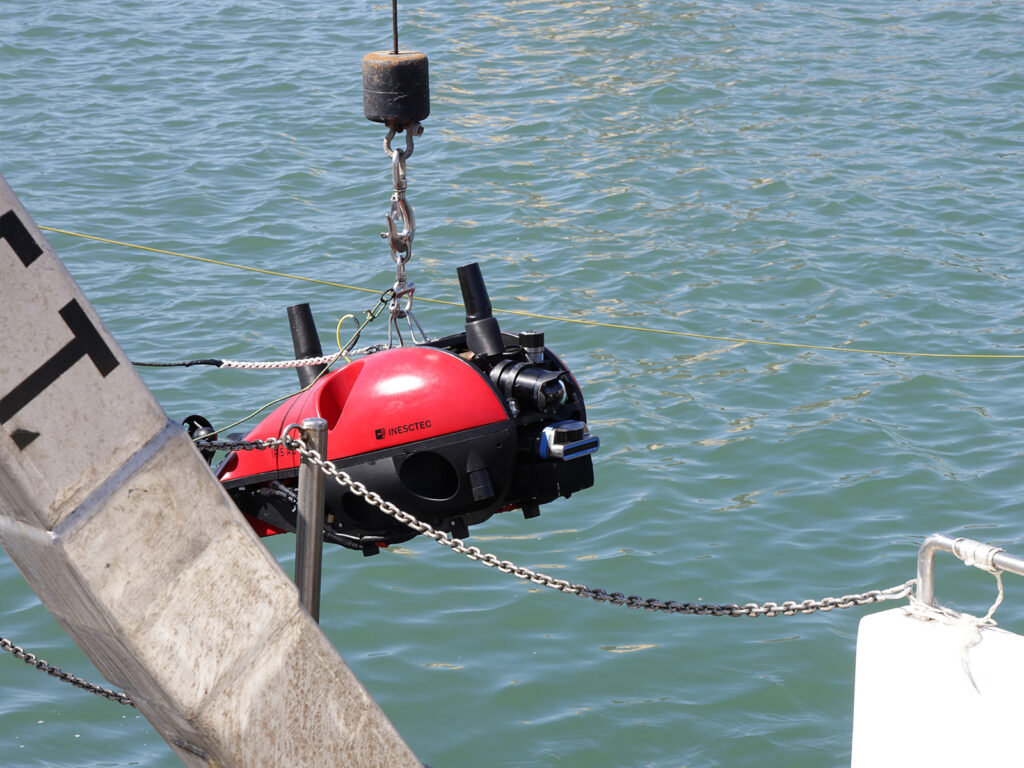
At the forefront of this technological transformation is INESC TEC’s research in Robotics and Autonomous Systems. Overcoming the barriers of the deep sea requires cutting-edge engineering: extreme pressures, the absence of GNSS signals/electromagnetic communications and limited energy autonomy are just some of the daily challenges of exploration below 1000 metres. In response to these complexities, INESC TEC has developed innovative robotic solutions — from aerial, surface and underwater vehicles to cooperative systems — taking Portuguese science from the laboratory to the Deep Atlantic.
A paradigmatic example of this vision is PETRA, our new Long-Range Deep-Sea Logistic AUV. Designed to operate at depths of up to 6000 metres and remain autonomously on the seabed for weeks, the PETRA autonomous underwater vehicle (AUV) addresses a critical gap in the national and international landscapes. By functioning as a platform for logistical support, environmental monitoring and remote underwater surveillance, PETRA drastically reduces dependence on large research vessels, disrupting the operational paradigm and paving the way for long-term missions in the Ocean.
This innovative AUV will soon be tested at a depth of 1000 metres, in the Atlantic Ocean, in tests in which, among other capabilities, its ability to deploy, reposition and retrieve small “lander-laboratories” — robots designed to collect ocean data at great depths — will be assessed. We believe that this type of vehicle represents a paradigm shift in the way we explore and monitor our seas.
Ensuring a sustainable, resilient and secure Ocean requires more than ambition: it requires mature, autonomous technology, capable of acting where human beings cannot reach. At INESC TEC, we remain committed to designing this new era of Marine Robotics — where scientific knowledge and technological sovereignty sail side by side.
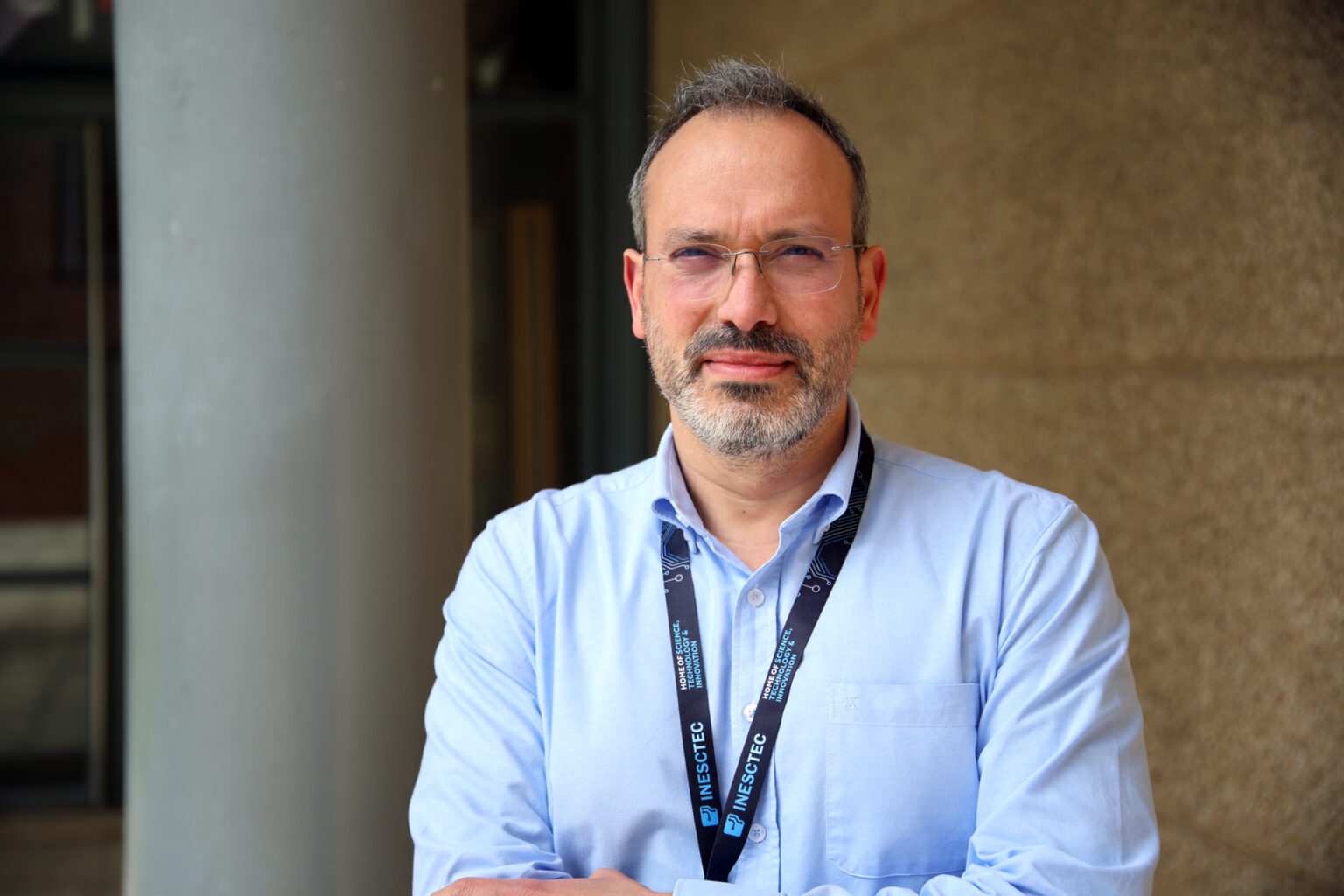
José Miguel Almeida, senior researcher and Coordinator of the Robotics and Autonomous Systems area at INESC TEC