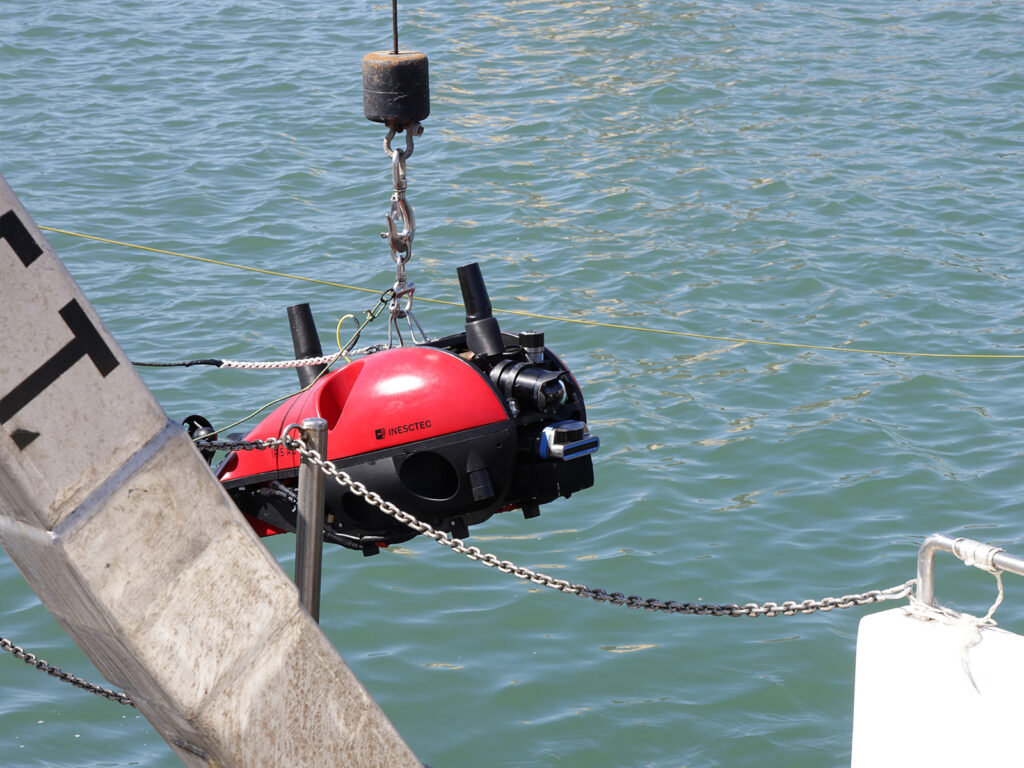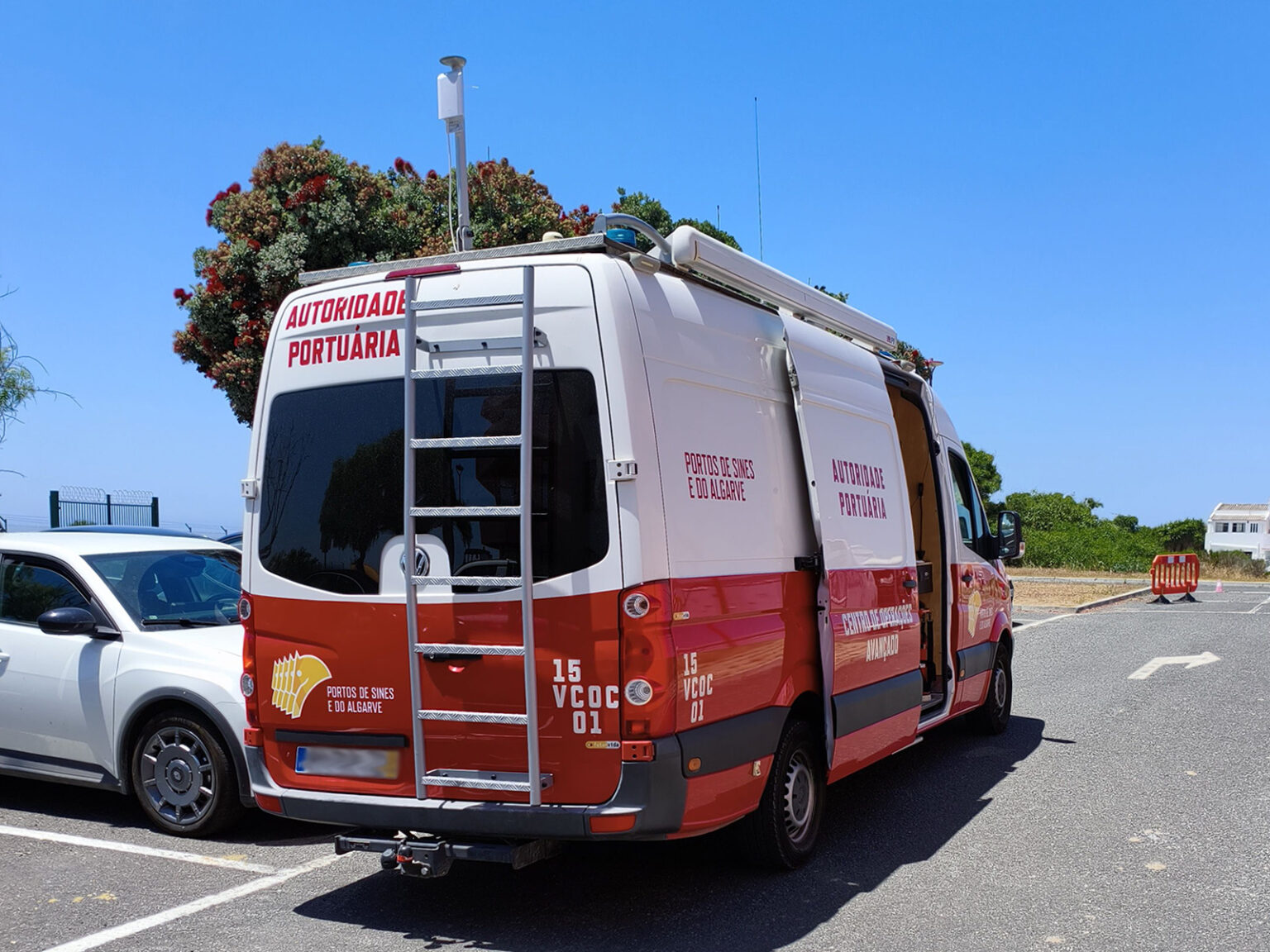
The final demonstration of the NEXUS project, featuring INESC TEC, took place at the Port of Sines, and the Institute’s researchers successfully tested a mobile 5G cell, contributing to an innovative solution in the field of 5G networks.
The cell – which is essentially a “portable 5G base station” that can be installed in a car, boat, or even a robot – is based on an open architecture and implementation known as Open Radio Access Network (O-RAN).
“The goal is to reinforce the network coverage provided by the fixed 5G infrastructure in areas where coverage is weak or non-existent,” explained INESC TEC researchers André Coelho and Hélder Fontes.
In the specific case of the NEXUS project and the demonstration, the Sines Port Authority (APS) holds a private 5G network, but that network does not cover the entire port area; as a result, there are certain areas that either have no signal or only a weak signal.
“With the mobile 5G cell it becomes possible to temporarily extend the coverage of the APS private 5G network at strategic points, supporting APS dynamic on-site operations, or even emergency scenarios. Essentially, the cell is useful to temporarily fill coverage gaps” said the INESC TEC researchers.
The cell was installed in an APS fire brigade emergency van. When activated, it created a “bubble of 5G coverage” around it, like a small mobile antenna. Any mobile phone or device near the van was then able to access a strong connection.
There were two main operating modes for the cell: standalone and integrated. “In standalone mode, the cell operates on its own, without needing the port network, creating a local network between connected devices. This is particularly useful when no network infrastructure is available, also enabling internet access via satellite.”
“In integrated mode, the cell connects to the port’s 5G network and extends it. This means that all devices – both those near the van and those elsewhere in the port – communicate normally as if they were on the same network. The connection between the van and the port can be made via private 5G, public 5G from a standard operator, or even satellite-based internet services (such as Starlink),” explained André Coelho and Hélder Fontes.
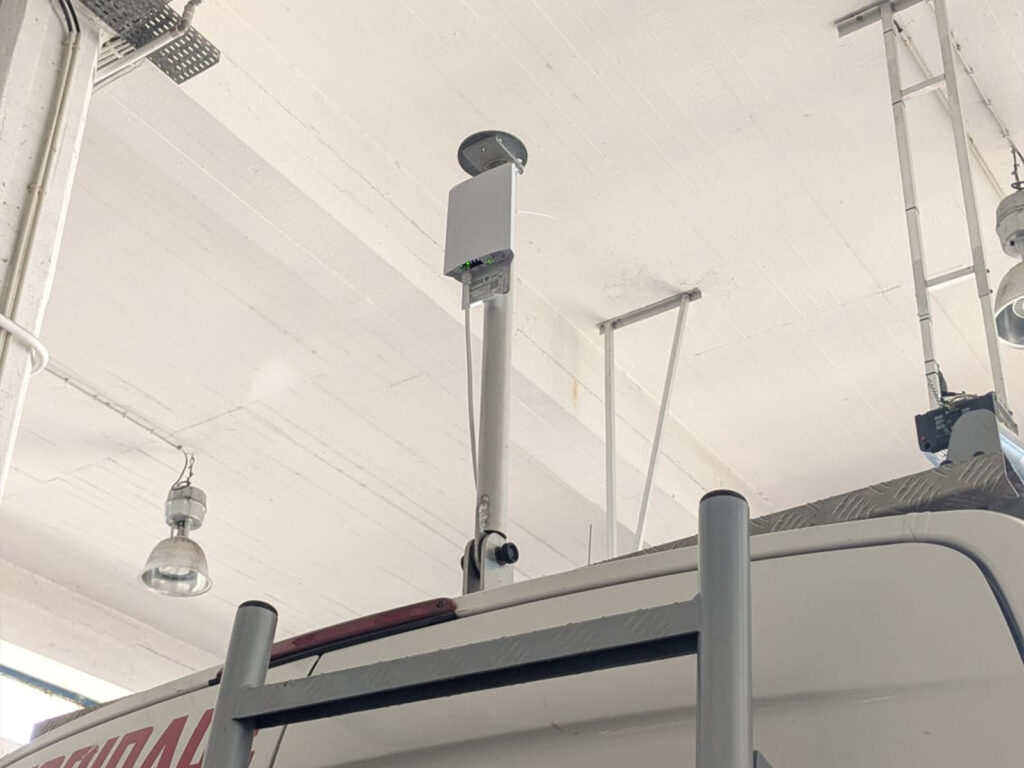
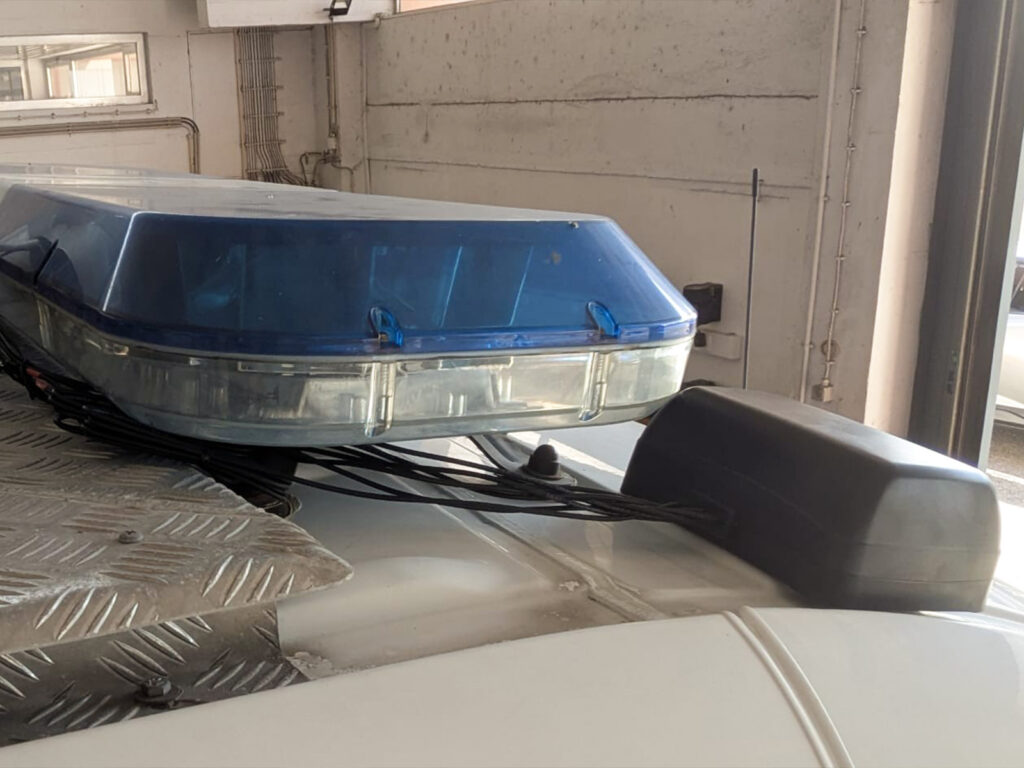
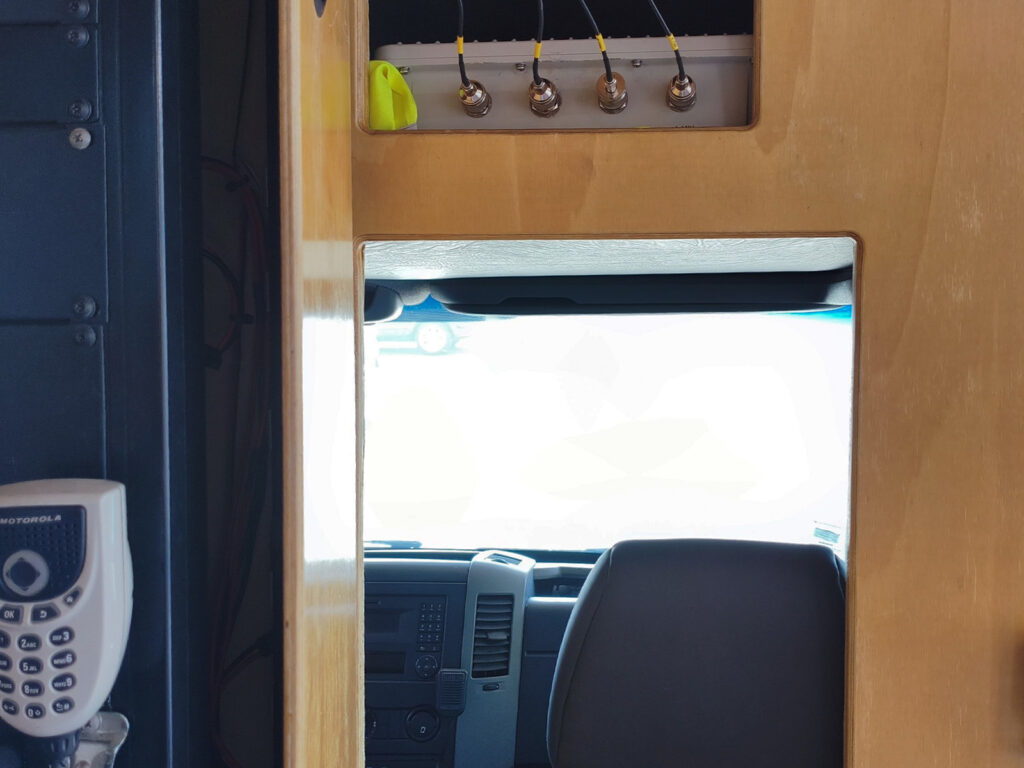
During the Sines demonstration, all subcomponents of the solution were validated. The demonstration was successful, with the stability and feasibility of the mobile 5G cell experimentally confirmed across all configuration modes.
“Even with the cell connected to a small antenna installed on the roof of the APS van, it was possible to validate an effective coverage radius of over 700 metres, even in urban conditions less favourable to signal propagation. In addition, throughput gains of over 50% in both downlink and uplink were demonstrated for 5G terminals when connected to the Mobile 5G Cell in scenarios of reduced coverage from the fixed infrastructure,” concluded the INESC TEC researchers.
The team was able to demonstrate that the mobile 5G cell is a functioning technology and a very useful tool for ensuring reliable communications in critical situations, e.g., emergencies or special operations, in areas where normal signal coverage is not sufficient.
These tests carried out in Sines correspond to the final demonstration of WP6/PPS23 of the NEXUS project, entitled “5G Connected Port”, led by Altice Labs and funded by the Recovery and Resilience Plan (PRR).