Portugal has one of the world’s longest and deepest-rooted maritime identities. From an early stage, sea exploration became a strategic national priority and a means of establishing the country’s presence in the international landscape. Today, this relationship with the ocean is being renewed in response to emerging global challenges and new scientific, technological and economic opportunities. The Blue Economy is increasingly recognised as a fundamental driver of sustainable development, demanding knowledge, innovation and the ability to operate in complex and challenging environments.
Growing pressure on traditional resources, the need to accelerate energy transition and the search for more sustainable solutions have driven the expansion of ocean-based activities. Aquaculture, offshore renewable energy, subsea energy and communications infrastructure, maritime surveillance and the protection of marine ecosystems are just some of the areas in which the ocean is emerging as a key space for the future. However, this expansion also brings significant challenges regarding water quality, operational safety, infrastructure durability, maintenance costs and the need to minimise risks in an inherently harsh environment.
It is within this context that monitoring assumes a central role. The ability to collect reliable, continuous, real-time data is now essential to support decision-making, anticipate problems, optimise operations and develop predictive models capable of addressing the needs of industry, science and society. From protecting our seas to improving the efficiency of the economic activities that depend on them, sensing technologies have become indispensable for strengthening and safeguarding the Blue Economy.
Among these technologies, optical sensing stands out as a particularly promising solution. Thanks to its precision, robustness, durability and ability to operate in demanding conditions, it enables the development of more reliable monitoring systems requiring less maintenance and offering strong potential for scalable deployment. These characteristics are particularly valuable in sectors such as fish and seaweed aquaculture, where water quality and continuous environmental monitoring are critical, but also in offshore renewable energy, where structural and operational monitoring is essential to ensure safety, efficiency and continuity.
INESCTEC.OCEAN was precisely created within this vision: to strengthen INESC TEC’s capacity to develop, integrate and deploy advanced technologies for the ocean, with a particular focus on optical sensing. It represents a strategic commitment to consolidating expertise, bringing research closer to the real needs of the maritime sectors, and contributing to technological solutions that are more accurate, durable, affordable and easily scalable.
Within the Applied Photonics area at INESC TEC, this mission is reflected in the development of technologies for a wide range of ocean-related applications – and, naturally, in the work carried out within the Centre of Excellence. From monitoring aquaculture systems to assessing infrastructure supporting offshore energy production, from monitoring subsea power cables to submarine telecommunications cables, the ongoing work seeks to address real-world challenges through innovative and sustainable solutions.
More than simply observing the ocean, we must develop a continuous understanding of it. More than using its resources, we must ensure that such exploitation is carried out in a responsible, safe and sustainable way. INESCTEC.OCEAN is positioned at the intersection of science, technology and society, contributing to a new generation of monitoring tools capable of supporting decision-making, protecting marine ecosystems and strengthening strategic sectors for both Portugal and Europe.
At a time when the ocean is expected to play a decisive role in addressing the major challenges of the future, the ability to measure, predict and act has become essential. Optical sensing is a key part of this journey, and INESCTEC.OCEAN stands as an initiative dedicated to transforming knowledge into impact, technology into sustainability, and the ocean into a space for responsible innovation.
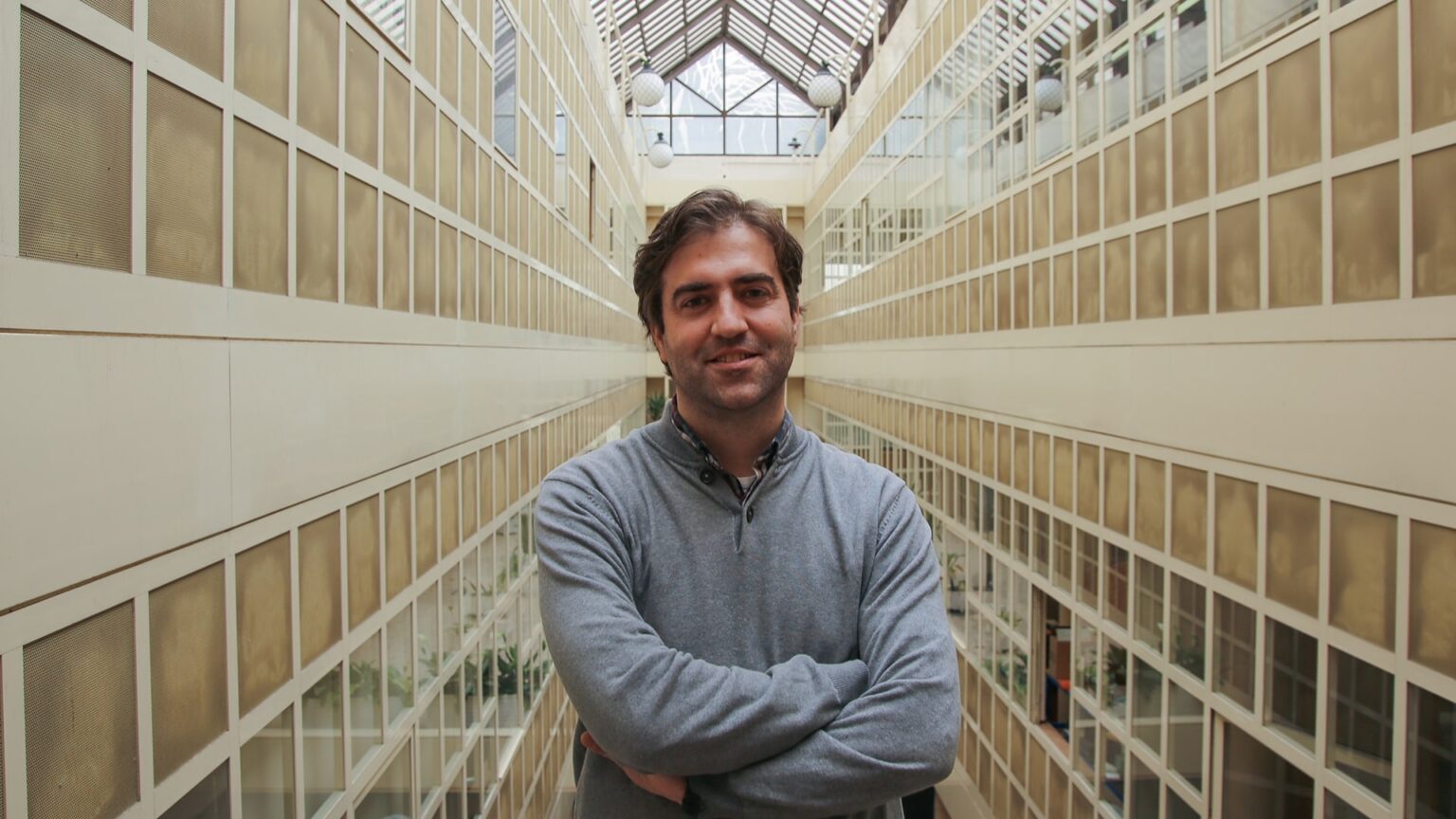
Luís Coelho, senior researcher and coordinator for the Applied Photonics area at INESC TEC