The Institution coordinates the European project DEEP-TECH, supported with €11.6M from the European Defence Fund. The project aims to develop new capabilities for robotic underwater platforms and autonomous infrastructures, integrating advanced technologies in energy systems, communications, sensing and threat detection. The goal is to improve the endurance, resilience and operational autonomy of unmanned systems in deep, high-risk maritime environments.
DEEP-TECH addresses a key need: the creation of critical infrastructures for operation, monitoring and surveillance on the ocean floor. According to researcher José Miguel Almeida, the project focuses on disruptive technologies required for deep-sea operations, including docking systems, energy storage, communications, sensing, advanced perception, logistics and autonomous systems.
“These technological advances are essential to establish resident systems capable of reaching depths of up to 6,000 metres, including unique docking capabilities at underwater bases, autonomous vehicles for logistics support, and autonomous relocation of sensor nodes on the seabed. The goal is to increase autonomy, resilience and operational permanence in deep-sea scenarios for the protection of critical underwater infrastructures”, said the researcher, also a lecturer at the Porto School of Engineering.
To make this vision a reality, “resident autonomous systems and logistics support systems are structural elements and lead to a reduction in the need for support vessels”. However, “this requires different components expected to be developed within the scope of DEEP-TECH”.
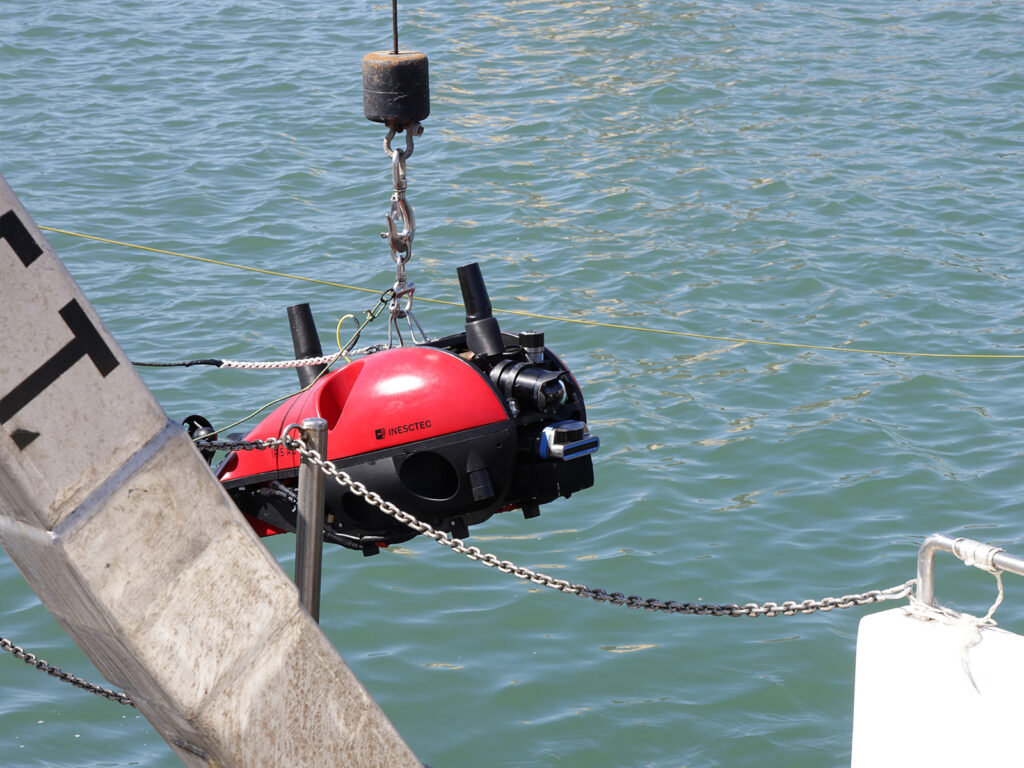
Hence, the initiative aims to shift surface operations and control actions to a network of autonomous, local, long-term underwater systems. Submerged charging platforms, deep-sea autonomous vehicles (AUVs), docking systems and subsea stations, UUVs (Unmanned Underwater Vehicles) for logistics and autonomous transport, or new layers of distributed acoustic sensing (DAS) in UUVs are some of the solutions to be explored.
These efforts bring together 18 partners from 10 countries, benefiting from funding of €11.6M – granted by the European Defence Fund – over 36 months. Coordinated by INESC TEC, the approval of this project (involving A. Silva Matos Metalomecânica and the Portuguese Navy) follows on from several proven results by the Institute in the field of deep-sea robotic systems. “Concerning civilian-related aspects, we already have several examples of technology operating at considerable depths, e.g., TURTLE lander, EVA autonomous underwater vehicle (AUV), and the new deep-sea AUV, PETRA,” mentioned out Hugo Silva, another INESC TEC researcher involved in the project.
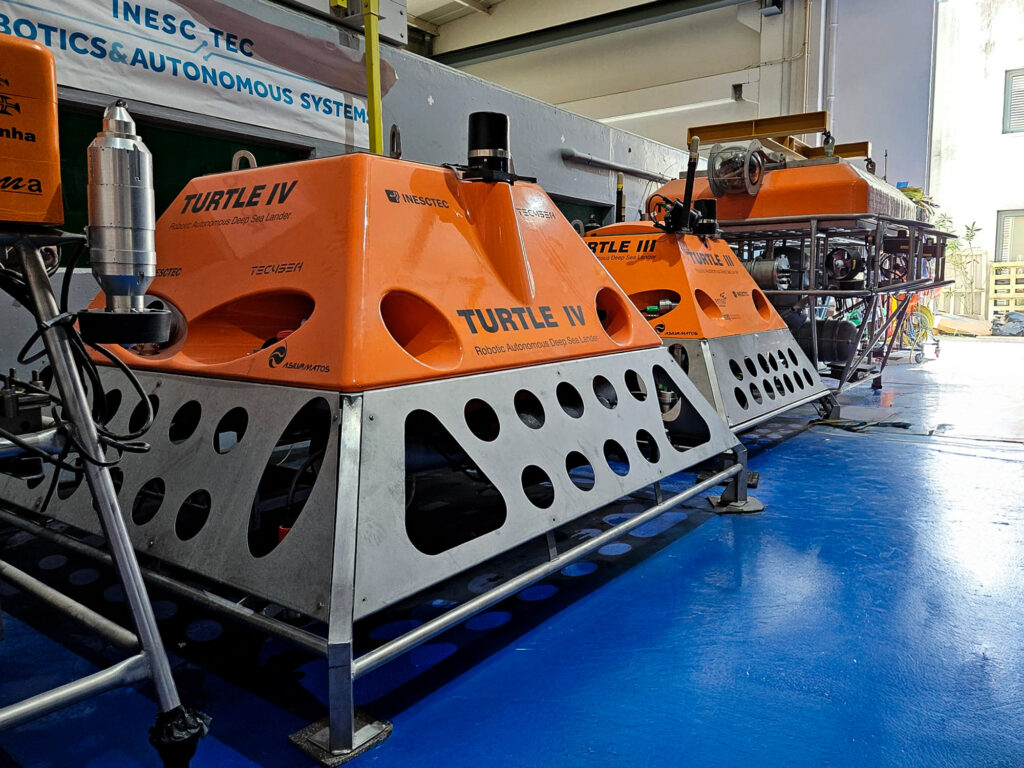
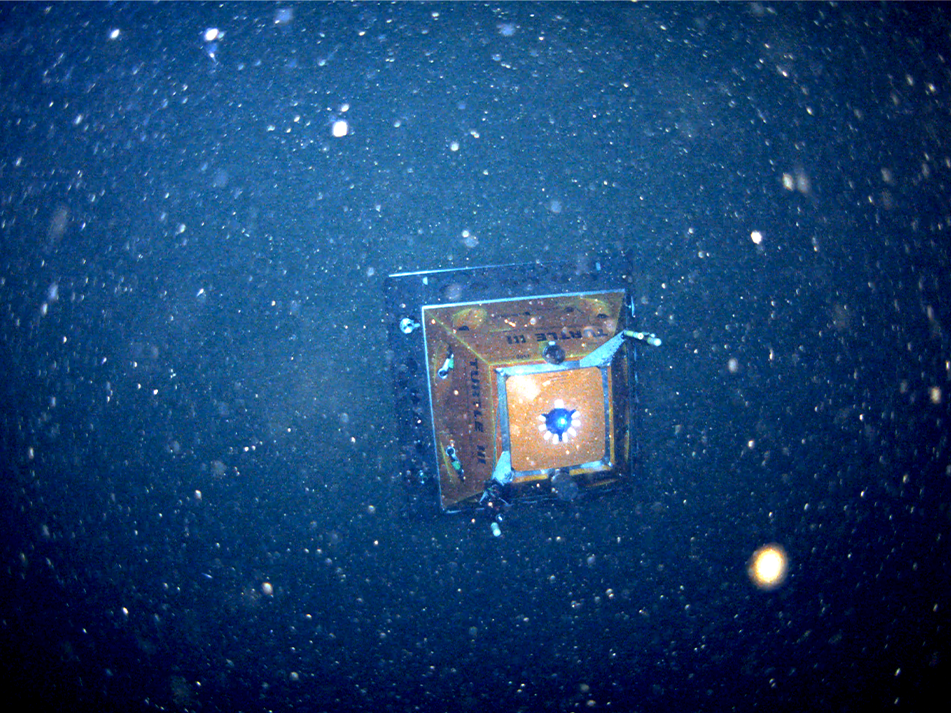
“These vehicles translate and enable the implementation of a strategic vision for underwater environments that INESC TEC has been developing over recent years, in different projects – now part of the DEEP-TECH initiative.” According to Hugo Silva, the work in this area focuses on “extending autonomy and operational capacity, whether in range, operating time at sea, or depth reached”. All the accumulated knowledge and experience will support DEEP-TECH, which is another step towards the effective surveillance of the Portuguese Sea.
“Since Portugal has the largest deep-water maritime exclusive economic zone (EEZ) in Europe, it becomes extremely important to develop the country’s defence industrial ecosystem,” the researchers emphasised. In addition to INESC TEC, the presence of A. Silva Matos Metalomecânica and the Portuguese Navy among the initiative’s members positions “Portugal as a country with R&D and industrial entities capable of coordinating and developing cutting-edge technology in a disruptive area such as deep-sea technology”.
This is the first time INESC TEC has led an EDF initiative and only the third led by a Portuguese entity. In addition, the Institute is also technical coordinator of other ongoing EDF projects: VICTORIOUS and BATTLEVERSE. According to António Gaspar, business developer in the Aerospace, Security and Defence (ASD) area at INESC TEC, the approval of these projects is “significant for Portugal, given the small number of EDF initiatives that the country has coordinated, and it contributes to the development of the national defence industry”.
“Additionally, DEEP-TECH addresses a critical area for national sovereignty, seeking to create solutions for the management of the Portuguese sea and and seabed – both in the current context and in the scenario of an extension of the continental shelf,” he added.
Alongside the recognition of robotics breakthroughs made in INESC TEC, António Gaspar also stated that leading this endeavour “demonstrates and validates the ability of an RTO [Research and Technology Organisation] to present and lead disruptive proposals, with innovative contributions in the field of Defence”.
INESC TEC “does not work specifically for this area, but it is one of the dimensions where it applies R&D results,” said António Gaspar, mentioning that the outcomes of research and development activities in marine robotics “are particularly applicable to sovereignty challenges in the deep sea”.
After the deep sea, TRIDENT has arrived for Defence
INESC TEC also participates in another initiative approved by the European Defence Fund: the TRIDENT project, which aims at “the development of technologies and methods for detecting threats in a military environment,” explained Hugo Silva, also involved in this initiative.
According to the researcher, within TRIDENT, INESC TEC “will contribute to the development of technologies and methods for threat detection, using swarms of drones in GNSS-denied environments”. In other words, “swarms” of drones operate together, particularly in locations where satellite signal is unavailable, blocked, or intentionally disrupted.
More specifically, Hugo Silva explained that the Institute will explore the “drones’ ability to self-localise with the help of their flight formation partners, particularly in cases of GPS signal loss related to jamming” – the act of overwhelming the satellite navigation system with powerful radio signals.
The TRIDENT project benefits from nearly €20M in EDF funding, involving 30 partners from 13 different countries. INESC TEC is the only Portuguese participant in this initiative, led by the French company Thales SIX GTS.
The approval of the DEEP-TECH and TRIDENT projects reflects recognition of INESC TEC’s work in the continuous production of knowledge, development of relationships, and “creation of value, understanding existing challenges and complementing the contribution of its partners”. António Gaspar also emphasised the importance of technological development in the current geopolitical context.
“Besides the process of reactivating the Defence sector, the European Union felt the need to create an R&D programme – the EDF – to tackle emerging threats, particularly associated with disruptive technologies such as AI, robotics, quantum, among others,” he explained.
According to him, through these projects and the resulting innovative technologies and solutions, INESC TEC “will contribute to strengthening European sovereignty and, consequently, national sovereignty”.