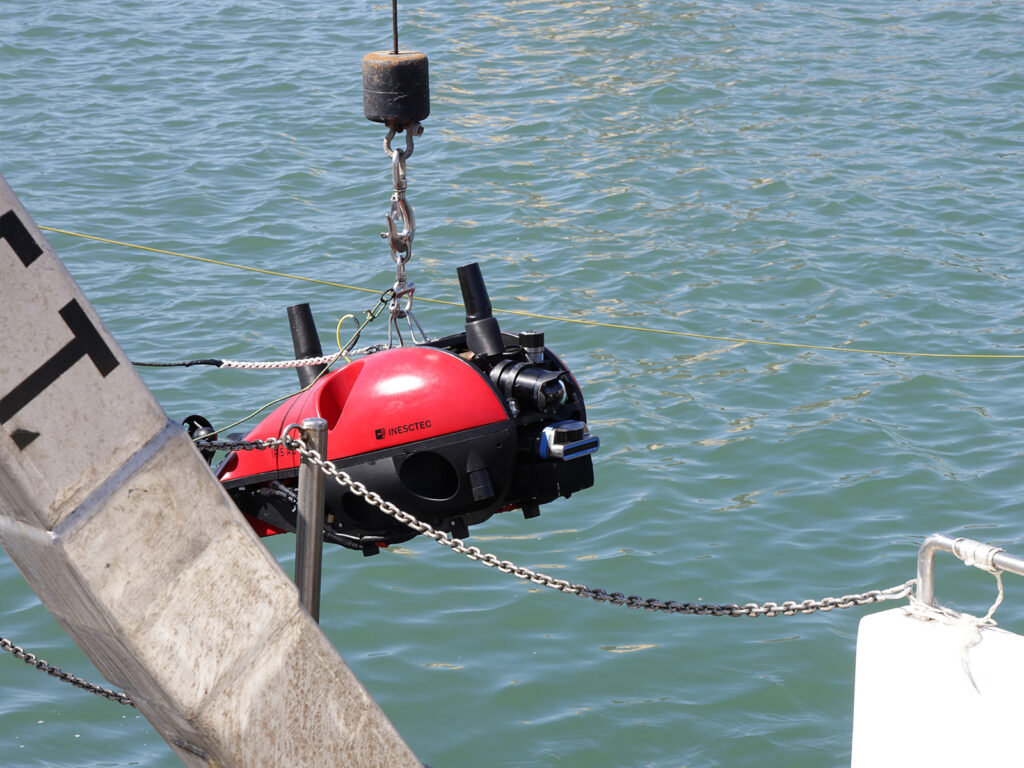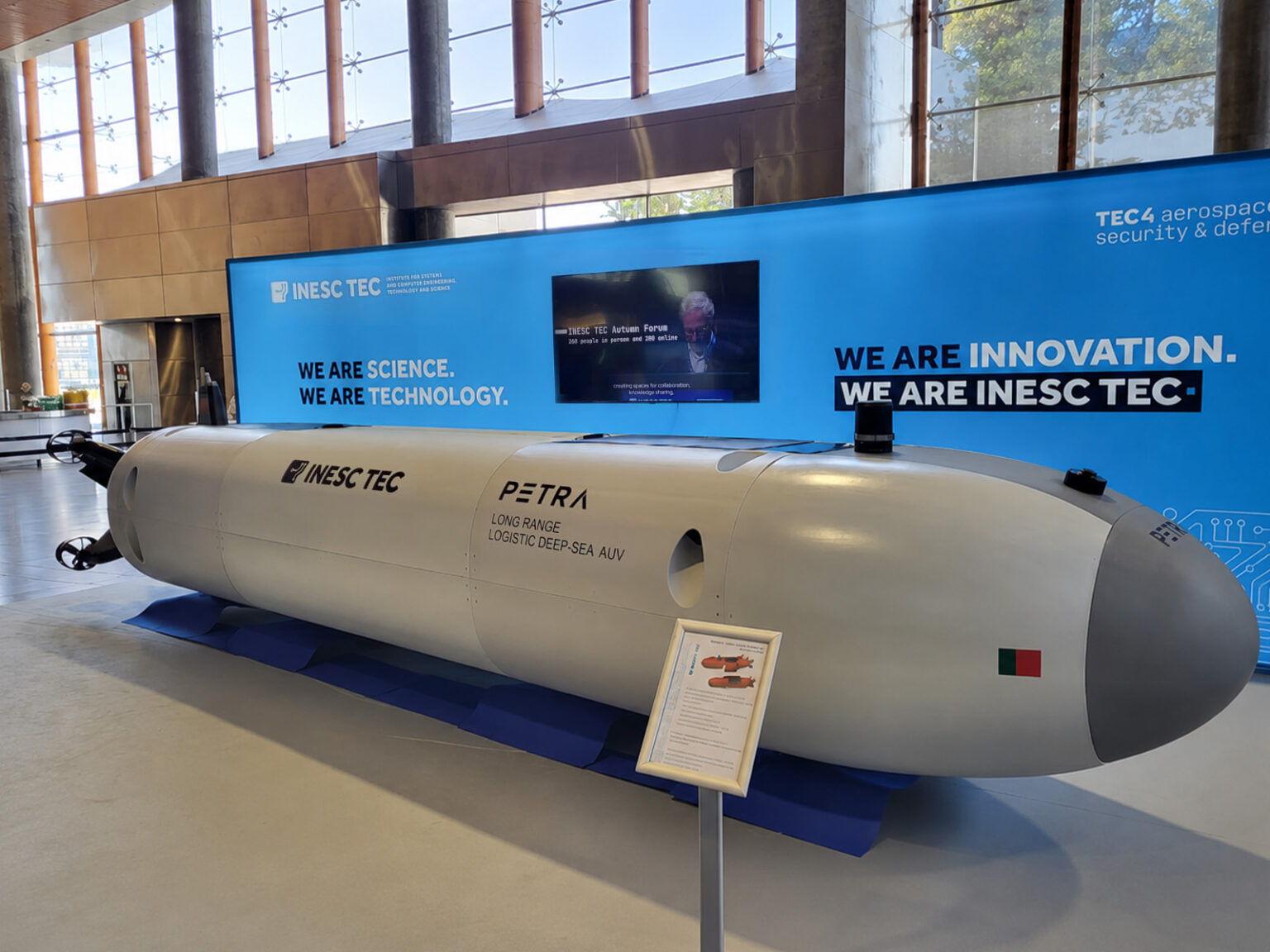
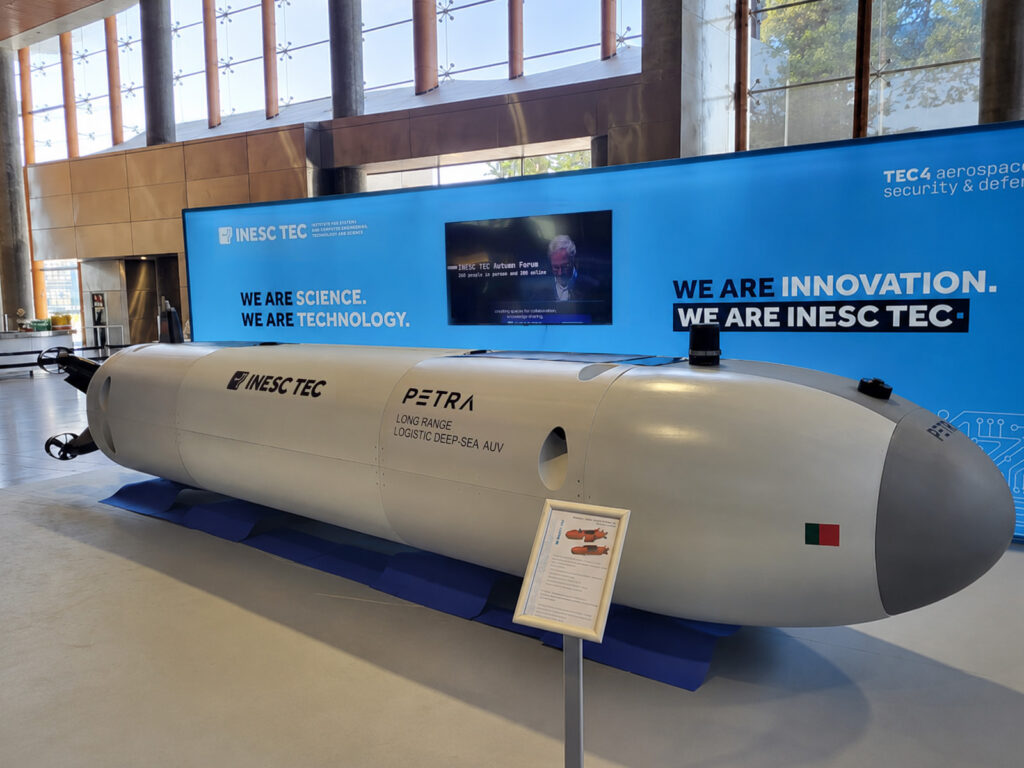
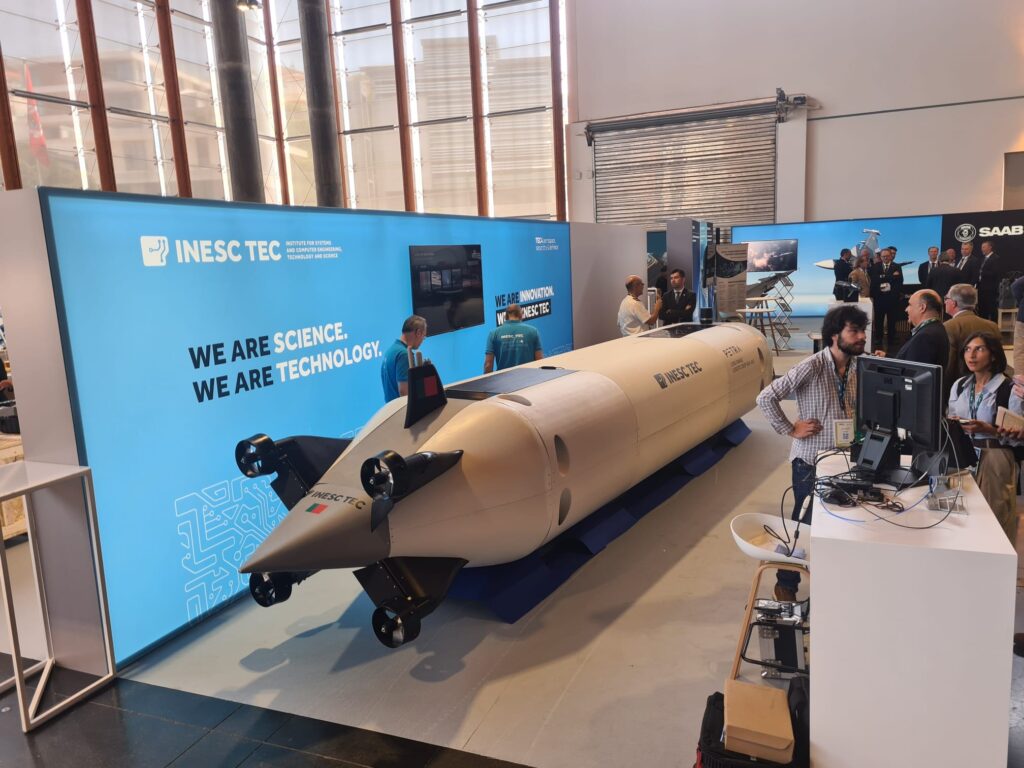
There is nothing like it in the world. The prototype is under development, with the first mission scheduled for May 2027 – where it will remain on the seabed for two weeks. But what exactly makes the new autonomous robot PETRA – Long-Range Deep-Sea Logistic AUV – developed by INESC TEC researchers so different?
In addition to the ability to descend to 6,000 metres and the autonomy to remain on the seabed for weeks, INESC TEC researcher José Miguel Almeida explained that it is “a highly innovative system, due to the logistical support function for deep-sea operations in remote locations”. In other words, “it enables the transport and recovery of equipment, e.g., seabed sensor nodes, the collection of the data they record, and the recharging of their batteries. These unique features make it possible to maintain underwater infrastructures without continuously relying on research vessels or offshore operation ships, nor on the use of work-class ROVs (remotely operated underwater vehicles) in lengthy and extremely costly operations – thus introducing new possibilities for the observation and monitoring of vast areas at great depths, at costs that are a fraction of current solutions.”
It is a new record in national engineering in general, and in autonomous robotic systems in particular – as well as a major step forward in facilitating operations in remote locations while minimising the need for vessels. The solutions are diverse and applicable to multiple scenarios.
Take, for example, a scientific observation mission. Current oceanographic research is highly dependent on research vessels as a central platform. They travel to the location with equipment and scientific teams, stop at the exact point where data is to be collected (whether from the seabed, the water column or the atmosphere) using sensors installed on the vessels themselves, on structures lowered through the water column, or from seabed nodes/observatories they deploy, or even by operating robotic vehicles like ROVs or AUVs for more local observation around the vessel.
PETRA breaks with this paradigm. “The cost of operating conventional vessels (economic, human and environmental) is clear: it involves crews, engines and combustion generators, and noise,” stated the lecturer of the Porto School of Engineering (ISEP), highlighting that “many of the operations these vessels perform, whether using surface-based sensors, ROVs, or even autonomous vehicles, could be carried out more efficiently using platforms such as PETRA, enabling these operations to be scaled and allowing for the collection of more spatially and temporally dense data.”
In addition, he explained, “the operating cost of a single vessel can be equivalent to that of an entire fleet of these robots.” But the advantages do not end there. “There is also the issue of operating conditions. Even during stormy weather, this robot can continue to operate. In polar regions, where it is practically impossible to reach areas by vessel in winter, we can collect data throughout the entire year.”
PETRA’s capabilities also extend to the domains of national defence and security. In terms of capabilities, operational costs and scalability, the robot’s application to multiple defence challenges is highly promising, as a new tool that complements existing crewed assets. It can be highlighted for the detection of illegal underwater exploitation activities, as well as the monitoring of assets (crewed or autonomous) in areas of strategic interest.
“Imagine there is suspicion of illegal exploitation in specific areas, or that it is necessary to monitor an underwater cable. The mission is defined from a remote-control centre, and from there the vehicle can not only follow the plan, but also make autonomous decisions that help achieve the objective,” he continued. “If it encounters difficulties, it returns to the surface or to a base, communicates with the control centre to report and receive updates, and continues the mission.”
José Miguel Almeida stated that “there are similar concepts in the world, but INESC TEC is the first to develop something of this kind”. PETRA brings together unique features in a single robot: great depth capability, high autonomy, logistical capacity and resident operation on the seabed. Modular and reconfigurable, the vehicle can vary between 6.4 and 8 metres in length and carry more than two cubic metres of payload.
The possibility of operating directly between ports is another element that may differentiate the system from existing solutions. In the future, it will be possible to have underwater bases along the Portuguese coast. “With a unit like this in specific areas, it is possible to operate between different bases, reaching further into the Atlantic, transporting energy or installing infrastructures, ensuring monitoring coverage at national scale. The vision is to have a fleet monitoring and exploring the entire extent of the Portuguese continental shelf.”
PETRA robot technology has been under development for around two years. The vehicle’s first mission will take place in 2027, in the Atlantic Ocean, as part of a European project.